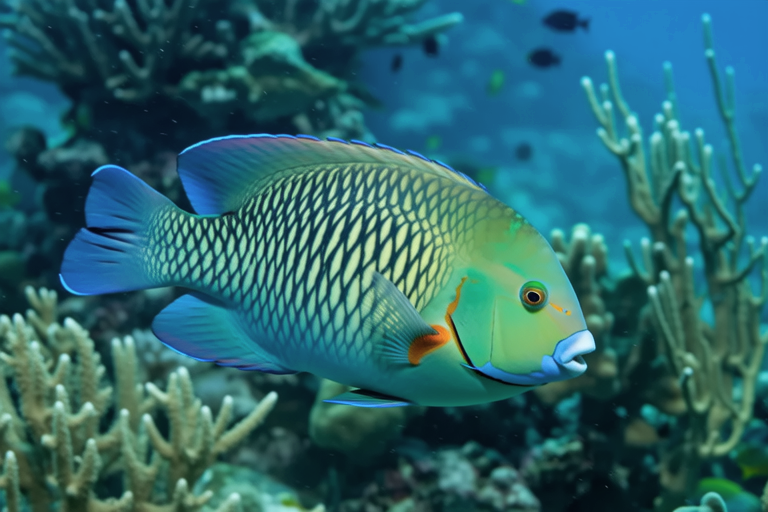
Unraveling the Mystery Behind the Vibrant Colors of Parrot Fish
The ocean’s coral reefs are teeming with life, each organism contributing to the complex ecosystem that supports countless species. Among the most captivating inhabitants of these underwater gardens are parrot fish, known for their dazzling array of colors. These fish play a crucial role in maintaining the health of coral reefs, and their vibrant hues have long intrigued marine biologists and enthusiasts alike.
A Unique Place in Marine Ecosystems
Parrot fish, belonging to the family Scaridae, are found in tropical and subtropical waters around the world. They are particularly abundant in the Indo-Pacific region, where they can be seen grazing on algae-covered coral reefs. These fish have a unique mouth structure resembling a parrot’s beak, which they use to scrape algae from rocks and coral. By feeding on algae, parrot fish help prevent overgrowth, which can otherwise smother corals and disrupt the delicate balance of the reef ecosystem. Their presence is vital for the survival of the reef and its inhabitants.
The Science Behind Their Colorful Hues
The vivid colors of parrot fish are not just aesthetically pleasing but also serve important biological functions. The primary reason for their bright hues is the presence of pigments called carotenoids in their skin. These pigments are derived from the algae they consume. The variety of colors displayed by different species and individuals within the same species can be attributed to differences in diet, environment, and biological factors.
Diet plays a significant role in determining the coloration of parrot fish. Species that feed on a wide range of algae tend to exhibit more vibrant and varied colors compared to those with a more restricted diet. For instance, the queen parrotfish (Scarus vetula) has a striking blue-green body with red stripes, while the stoplight parrotfish (Sparisoma viride) displays a brilliant yellow body with green highlights. These colors are not only beautiful but also serve as a form of identification among individuals.
The environment also influences the coloration of parrot fish. Water temperature, light intensity, and the presence of other organisms can all affect the pigmentation of these fish. Cooler waters often result in darker colors, while warmer waters may produce brighter hues. Additionally, the interaction between sunlight and water molecules can cause certain colors to appear more vivid or subdued depending on the depth at which the fish are swimming.
Evolutionary Advantages of Their Colorful Appearance
The colorful appearance of parrot fish offers several evolutionary advantages. One of the most significant benefits is camouflage, allowing them to blend into their surroundings and avoid predators. The intricate patterns and colors of parrot fish enable them to mimic the colors of coral and algae, making it difficult for larger fish to spot them. This adaptation is especially useful during their resting periods when they are more vulnerable.
Coloration also serves as a means of communication within their species. Different colors can indicate age, sex, or social status. For example, male parrot fish often display brighter colors during mating season to attract females. In some species, males may even change their coloration temporarily to signal dominance or readiness to mate. This form of communication is crucial for the continuation of the species and helps maintain harmony within their social structures.
Interesting Facts About Different Species
There are approximately 90 recognized species of parrot fish, each displaying unique characteristics and color variations. Some of the most fascinating include:
- Blue Parrotfish (Scarus coeruleus): Known for its electric blue color, this species is one of the largest parrot fish, growing up to 1 meter in length. It inhabits deeper waters and is often seen near coral reefs.
- Red Stripe Parrotfish (Sparisoma rubripinne): As its name suggests, this fish has distinct red stripes running along its body. It is commonly found in shallow waters and is known for its aggressive behavior when defending its territory.
- Donkey Dung Parrotfish (Scarus psittacus): Named for its distinctive brownish color that resembles donkey dung, this species is known for its ability to change color rapidly. It uses this ability to communicate and avoid predators.
Each species of parrot fish has adapted to its specific habitat, and their color variations reflect these adaptations. From the deep blues of the blue parrotfish to the bold red stripes of the red stripe parrotfish, the diversity in coloration is a testament to the adaptability of these remarkable creatures.
The Importance of Preserving Marine Environments
The vibrant colors of parrot fish are not just a source of wonder but also a reminder of the delicate balance of marine ecosystems. Human activities such as pollution, overfishing, and climate change pose significant threats to these environments. Coral reefs, which provide essential habitats for parrot fish, are particularly vulnerable to rising sea temperatures and increased acidity caused by carbon dioxide emissions. These changes can lead to coral bleaching and death, ultimately affecting the entire ecosystem.
Preserving marine environments is crucial for the survival of parrot fish and other marine species. Conservation efforts, such as establishing marine protected areas and promoting sustainable fishing practices, can help mitigate the impact of human activities. Educating the public about the importance of marine biodiversity and encouraging responsible behavior can also contribute to the protection of these vibrant creatures.
In conclusion, the vibrant colors of parrot fish are more than just a visual spectacle; they are a reflection of the intricate relationships within marine ecosystems. Understanding the science behind their coloration and the evolutionary advantages it provides can deepen our appreciation for these remarkable creatures. By taking steps to preserve their habitats, we can ensure that future generations will continue to marvel at the beauty and complexity of the ocean’s coral reefs.
