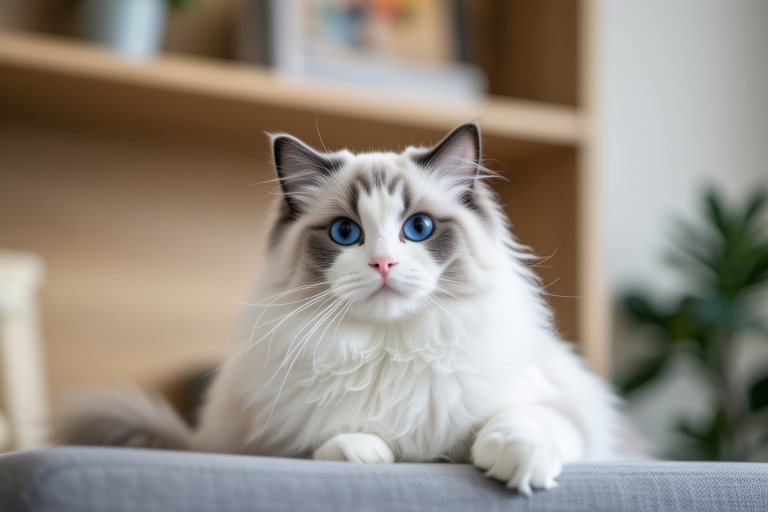
Unveiling the Graceful Mystery: Life with a Ragdoll Cat
Ragdoll cats have long been a favorite among cat enthusiasts for their unique blend of gracefulness and docility. These felines, known for their semi-longhair coats and striking blue eyes, have captured the hearts of many pet lovers. Their affectionate demeanor and adaptable nature make them excellent companions for families, singles, and even those living in apartments. In this article, we will delve into the world of Ragdoll cats, exploring their origins, physical traits, daily life experiences, and tips for potential owners.
The Unique Characteristics of Ragdoll Cats
Ragdolls are renowned for their laid-back and docile temperament. Unlike many other breeds, Ragdolls tend to go limp when held, much like a rag doll, giving them their name. This behavior is often endearing to their owners, who find it charming and soothing. Their gentle nature makes them perfect for households with children or other pets, as they rarely display aggression or territorial behavior.
Physically, Ragdolls are medium to large-sized cats with a semi-longhair coat that requires regular grooming. Their fur is soft and silky, and their coat color can vary widely, from seal point to chocolate point, blue point, lilac point, and more. One of the most striking features of Ragdolls is their deep blue eyes, which add to their captivating appearance. Their bodies are muscular yet elegant, making them both strong and agile.
The History Behind the Breed
The history of Ragdoll cats is as intriguing as their name suggests. Developed by Ann Baker in Riverside, California, during the 1960s, the breed was created by crossing Persian, Birman, and Siamese cats. Baker’s goal was to create a cat that would be affectionate, intelligent, and loyal. She named the breed after one of her foundation cats, Josephine, who had a tendency to go limp when picked up.
Initially, Ragdolls were registered with the International Cat Association (TICA) in 1973, and later, the Cat Fanciers’ Association (CFA) recognized them as a formal breed in 1994. Today, Ragdolls are one of the most popular cat breeds worldwide, cherished for their unique combination of beauty and personality.
Daily Life Experiences of Owning a Ragdoll
Owning a Ragdoll cat is a rewarding experience that brings joy and companionship to your home. These cats are known for their loving interactions with family members. They enjoy being close to their owners, often following them around the house and seeking out attention through purring, head butts, and gentle nudges. Their loyalty and affectionate nature make them ideal pets for individuals looking for a cat that will bond closely with their human companions.
Ragdolls are highly adaptable to different environments, making them suitable for various living situations. Whether you live in a small apartment or a spacious home, Ragdolls can adjust to their surroundings with ease. They are generally quiet and well-behaved, which makes them ideal for homes where peace and tranquility are valued. However, they do require some space to explore and play, so providing them with toys and scratching posts is essential.
One of the joys of owning a Ragdoll is watching them interact with other pets. Their friendly disposition allows them to get along well with dogs, birds, and other cats, making them a great choice for multi-pet households. However, it is important to introduce new pets gradually and under supervision to ensure a smooth transition.
Health Concerns and Care Tips
While Ragdolls are generally healthy cats, there are a few health concerns that potential owners should be aware of. Hypertrophic cardiomyopathy (HCM), a heart condition, is one of the most common issues affecting the breed. Regular veterinary check-ups and genetic testing can help monitor and manage this condition. Other health concerns include polycystic kidney disease (PKD) and progressive retinal atrophy (PRA).
To ensure a happy, healthy life for your Ragdoll, proper care and attention are essential. Regular grooming is necessary to keep their coat shiny and free of tangles. A balanced diet rich in protein, vitamins, and minerals is also crucial for maintaining their overall health. Providing ample opportunities for exercise and mental stimulation, such as interactive toys and climbing structures, will help prevent obesity and boredom.
Training Ragdolls can be a fun and rewarding experience. While they may not respond to traditional training methods, positive reinforcement techniques, such as treats and praise, can encourage good behavior. Teaching them simple commands, like ‘come’ or ‘sit,’ can strengthen the bond between you and your cat. Additionally, establishing a routine for feeding, grooming, and playtime can help your Ragdoll feel secure and comfortable in their environment.
Why Ragdoll Cats Are Cherished Pets
Ragdoll cats are cherished pets for their gentle personalities and the joy they bring to their human companions. Their affectionate nature and loyalty make them ideal companions for those seeking a close bond with their pet. Their calm demeanor and adaptability make them suitable for various living situations, from small apartments to large homes. Whether you’re looking for a lap cat or a playful companion, Ragdolls offer a unique blend of grace, intelligence, and affection that is hard to resist.
In conclusion, owning a Ragdoll cat is a delightful experience that brings love and companionship to your home. By understanding their unique characteristics, history, and care requirements, you can provide a happy, healthy life for your Ragdoll. With their gentle nature and striking appearance, Ragdolls are sure to become cherished members of your family.
