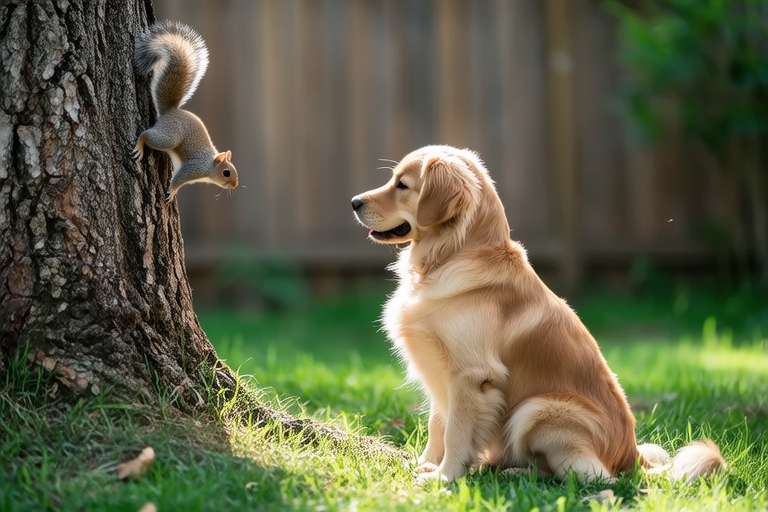
From Backyard to Bark: How Squirrels Interact with Your Dog
In many suburban and rural areas, it’s a common sight to see dogs and squirrels sharing the same backyard. This harmonious yet often competitive coexistence provides a fascinating window into the complex world of animal behavior. Both species have distinct behaviors that are shaped by their evolutionary history, and when these behaviors intersect, they create a dynamic scene that can be both entertaining and enlightening.
The Natural Behaviors of Dogs and Squirrels
Dogs, as descendants of wolves, are inherently social creatures with a strong pack mentality. Their primary instincts revolve around hunting, protecting territory, and bonding with their pack. These instincts are what make them such excellent companions for humans but also contribute to their interest in smaller animals like squirrels.
Squirrels, on the other hand, are agile, quick-thinking rodents that have adapted to live alongside humans. They are primarily herbivores, feeding on nuts, seeds, and fruits, but their diet can vary depending on availability. Squirrels are known for their ability to navigate trees and ground with ease, making them difficult targets for predators.
Their differing behaviors create an interesting dynamic. While dogs are curious and may want to engage with the squirrel, the squirrel is typically more interested in avoiding confrontation. This leads to a situation where the dog might chase the squirrel, and the squirrel will attempt to evade or hide.
Chase Dynamics: A Biological and Behavioral Perspective
When a squirrel enters a dog’s environment, the chase is often initiated by the dog’s instinctual drive to hunt. From a biological standpoint, this behavior is deeply rooted in the canine’s evolutionary past. In the wild, wolves and other canines would chase and hunt smaller prey to survive. Domesticated dogs retain this instinct, even though they no longer need to hunt for food.
For the squirrel, the chase is a matter of survival. Their first response is usually to freeze and remain still, hoping to avoid detection. If detected, the squirrel will use its speed and agility to escape. It may dart up a tree, climb down another side, or hide in dense vegetation. The squirrel’s erratic movements can trigger the dog’s prey drive, leading to an extended chase.
Interestingly, the chase is not always straightforward. Sometimes, the squirrel will stand its ground and show aggressive behavior, such as puffing up its tail or making loud noises. This can momentarily deter the dog, giving the squirrel time to escape. However, if the dog persists, the squirrel will continue its evasive maneuvers.
Tips for Pet Owners
While the chase between dogs and squirrels can be thrilling to watch, it’s important for pet owners to manage these interactions safely and effectively. Here are some tips:
- Supervision: Always supervise your dog when it’s in the yard, especially if there are squirrels present. This ensures that you can intervene if necessary and prevent any potential accidents.
- Training: Teach your dog basic commands such as ‘leave it’ or ‘come.’ These commands can be invaluable in stopping a chase before it starts.
- Distractions: Use toys or treats to distract your dog from chasing squirrels. Redirecting its attention can help reduce the frequency of chases.
- Enclosures: Consider installing a fence that extends underground to prevent squirrels from entering your yard. This can reduce the likelihood of encounters.
- Patience: Some dogs may never fully stop chasing squirrels. In such cases, patience and consistent training are key. Gradually work on reducing the intensity and duration of chases.
It’s also worth noting that while chasing squirrels can be fun for dogs, excessive chasing can lead to stress and anxiety for both the dog and the squirrel. Therefore, it’s important to strike a balance between allowing your dog to express its natural instincts and ensuring the safety and well-being of all involved.
Deepening Our Understanding of Animal Behavior
Observing the interactions between dogs and squirrels can provide valuable insights into animal behavior. These observations can help us understand not only the behavior of individual species but also the broader context of predator-prey relationships.
For instance, the chase between a dog and a squirrel demonstrates the intricate balance between predator and prey. The squirrel’s ability to evade the dog showcases its adaptability and intelligence, while the dog’s persistence highlights the strength of its instincts. By studying these interactions, we can gain a deeper appreciation for the complexity of nature and the ways in which different species coexist.
Moreover, these observations can also inform our approach to pet ownership. Understanding why dogs chase squirrels can help us better train and manage our pets, ensuring their safety and happiness. It can also foster a greater respect for wildlife and encourage responsible pet ownership.
In conclusion, the interactions between dogs and squirrels in backyards offer a unique opportunity to explore the fascinating world of animal behavior. By observing these interactions, we can gain a deeper understanding of the instincts and behaviors that shape our pets and the wildlife around us. With careful management and supervision, these interactions can be both enjoyable and educational, enriching our experience as pet owners and nature enthusiasts.
