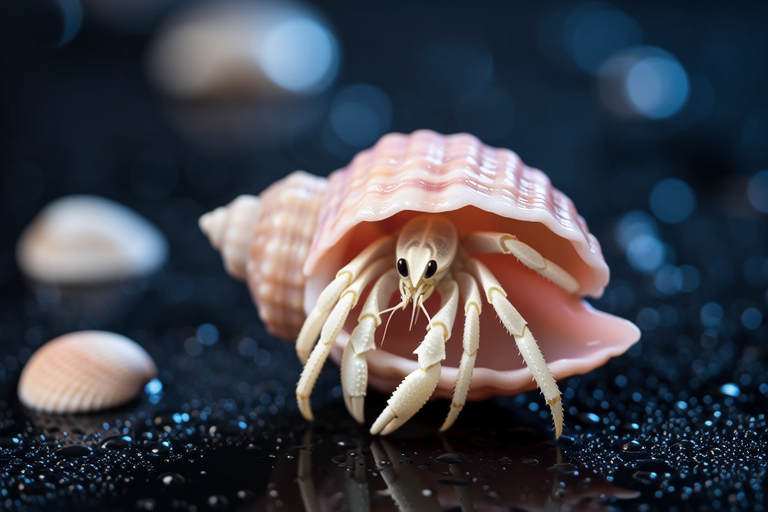
The Pea Crab: The Tiniest Crustacean in the Ocean
The pea crab (Pinnotheres) is a diminutive yet fascinating creature that has captured the interest of marine biologists for decades. This minuscule crustacean holds the title of being the smallest in the entire group, making it a unique subject of study. With a body length rarely exceeding half an inch, pea crabs are often mistaken for mere specks in the vast oceanic realm. Despite their petite size, these creatures have developed remarkable adaptations that allow them to thrive in their challenging aquatic environment.
Physical Characteristics
Pea crabs possess a distinct appearance that sets them apart from larger crab species. Their carapace, or outer shell, is typically triangular in shape, measuring less than 1 centimeter across. Their coloration varies widely, ranging from pale beige to dark brown, depending on their specific habitat and diet. This camouflage aids in their ability to blend seamlessly into their surroundings, enhancing their survival rate. Unlike many other crabs, pea crabs lack claws, which may seem like a disadvantage but actually serves as an evolutionary adaptation that allows them to maneuver efficiently within the tight confines of their hosts.
Habitat and Diet
Pea crabs are predominantly found in coastal waters around the world, inhabiting a variety of marine environments. They are most commonly associated with bivalve mollusks, such as clams, oysters, and scallops, as well as sea anemones and sponges. These habitats provide both protection and a reliable food source, essential for their survival. Within these host organisms, pea crabs find shelter from predators and harsh environmental conditions, while also gaining access to nutrients through the consumption of host tissues and expelled waste products.
Their diet primarily consists of soft-bodied prey, including small planktonic organisms and detritus. Pea crabs are opportunistic feeders, taking advantage of whatever food sources are available within their confined space. They have specialized mouthparts designed for scraping and filtering, enabling them to efficiently gather microscopic particles suspended in the water. Additionally, they supplement their diet by consuming the mucus produced by their host animals, which contains nutrients that are otherwise inaccessible to them.
Symbiotic Relationships
One of the most intriguing aspects of pea crab biology is their symbiotic relationships with other sea creatures. These relationships are characterized by mutualism, where both parties benefit from the association. Pea crabs enter into these partnerships by seeking refuge within the shells of bivalves or the bodies of sea anemones and sponges. In return, they offer protection to their hosts against parasites and predators.
For instance, when a pea crab enters a clam’s shell, it occupies a specially adapted cavity known as a gill chamber. Here, the crab remains hidden from potential threats while simultaneously deterring parasitic organisms that might otherwise harm the clam. Similarly, when pea crabs reside within sea anemones, they contribute to the host’s defense mechanisms by warding off intruders. In exchange for this service, the anemone provides the crab with a safe haven and a steady supply of food.
The ‘Big Secret’ of Survival Tactics and Reproduction Methods
The ‘big secret’ behind pea crabs’ success lies in their reproductive strategies and adaptability. Female pea crabs lay eggs inside the protective enclosures provided by their hosts. Once hatched, the juvenile crabs remain within these secure environments until they reach maturity. This strategy ensures that young pea crabs have a higher chance of survival compared to those born in more exposed areas.
In addition to this protective measure, pea crabs have evolved to be highly adaptable to changes in their environment. They can quickly adjust their behavior and physiology in response to shifts in temperature, salinity, and food availability. This flexibility enables them to persist in diverse habitats and withstand fluctuations in their ecosystem.
Interesting Facts and Recent Scientific Discoveries
Recent studies have shed light on several fascinating aspects of pea crab behavior and physiology. For example, researchers have discovered that pea crabs exhibit complex social structures within their host organisms. They communicate through chemical signals and tactile interactions, coordinating activities such as feeding and defense.
Another exciting finding is the discovery of a previously unknown species of pea crab in the deep-sea environment. This newly identified species, Pinnotheres abyssalis, lives within the shells of deep-sea clams and exhibits unique adaptations to cope with the extreme pressures and temperatures found at great depths. Its existence highlights the diversity and resilience of pea crabs and underscores the importance of continued exploration in uncharted marine territories.
The Importance of Studying Tiny Species for Understanding Marine Ecosystems
Studying pea crabs and other similarly small organisms is crucial for comprehending the intricate dynamics of marine ecosystems. These tiny creatures play vital roles in nutrient cycling, energy flow, and biodiversity maintenance. By examining the interactions between pea crabs and their hosts, scientists can gain valuable insights into the broader ecological processes occurring within aquatic environments.
Furthermore, understanding the adaptations and survival strategies of pea crabs can inform conservation efforts aimed at preserving marine biodiversity. As human activities continue to impact oceans worldwide, it becomes increasingly important to protect vulnerable species and maintain healthy ecosystems. Research on pea crabs and similar organisms contributes to this goal by providing essential information about the factors influencing their populations and distribution.
In conclusion, the pea crab represents a remarkable example of adaptation and coexistence in the marine world. Its status as the smallest crustacean belies its significant ecological importance. Through ongoing research and observation, we can deepen our understanding of these fascinating creatures and the complex web of life they inhabit.
