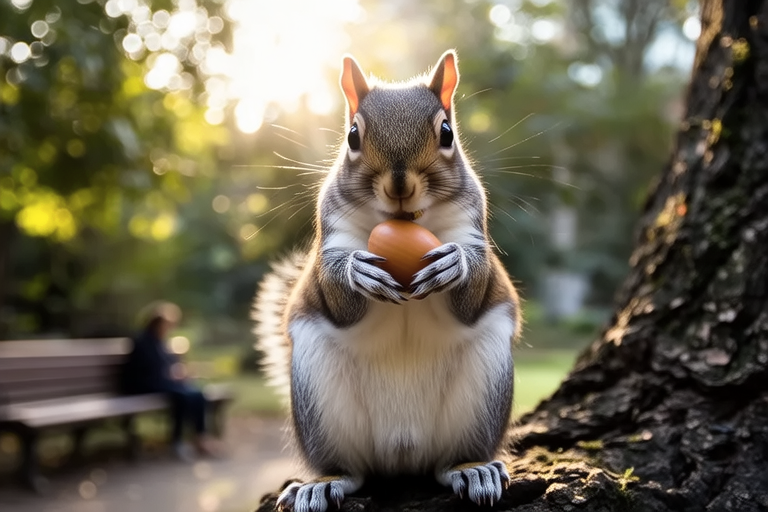
Dual Perceptions of Urban Squirrels: Adorable or Annoying?
Urban squirrels have become a common sight in cities worldwide. Their presence often evokes mixed emotions among city dwellers. Some find them adorable, while others consider them annoying pests. This article delves into the dual perceptions of urban squirrels, examining their behaviors, habitats, and interactions with humans. It also explores scientific studies on their adaptability, social structures, and problem-solving skills.
The Behaviors and Habitats of Urban Squirrels
Urban squirrels are highly adaptable animals that thrive in human-dominated environments. They are most commonly found in parks, gardens, and residential areas, where they build nests in trees or attics. Their diet consists mainly of nuts, seeds, fruits, and insects, but they are known to raid bird feeders and garbage cans for food.
One of the most endearing behaviors of squirrels is their acrobatic movements. They can leap from tree to tree, run along power lines, and even hang upside down from branches. These antics often draw admiration from onlookers, who appreciate their agility and grace.
However, their playful nature can also be a source of frustration for homeowners. Squirrels are notorious for digging up newly planted flowers and vegetables, chewing on electrical wires, and causing damage to buildings. Their ability to squeeze through small openings and climb walls makes it difficult to keep them out of attics and garages.
Scientific Studies on Adaptability, Social Structures, and Problem-Solving Skills
Several scientific studies have been conducted to understand the adaptability, social structures, and problem-solving skills of urban squirrels. One study published in the journal Animal Behaviour found that eastern gray squirrels (Sciurus carolinensis) are capable of learning complex tasks, such as opening locked containers, within minutes. The researchers concluded that squirrels possess remarkable cognitive abilities, which enable them to survive in urban environments.
Another study published in the Journal of Mammalogy examined the social behavior of red squirrels (Tamiasciurus hudsonicus). The researchers observed that red squirrels are territorial and aggressive towards intruders. However, they also engage in cooperative behavior, such as sharing food and grooming each other. These findings suggest that squirrels have a complex social structure that allows them to live harmoniously in urban settings.
Dr. Robert L. Kays, a mammalogist at the North Carolina Museum of Natural Sciences, emphasizes the importance of studying urban squirrels. “Understanding how squirrels adapt to urban environments can provide valuable insights into the ecology of other wildlife species,” he says. “Moreover, it can help us develop strategies for managing conflicts between humans and wildlife.”
Personal Anecdotes and Expert Opinions
Many people have fond memories of interacting with urban squirrels. For instance, Sarah, a resident of New York City, recalls feeding a squirrel in Central Park. “It was such a cute little creature,” she says. “I felt like I was making a new friend.” However, her neighbor John has a different experience. “Squirrels are a menace,” he says. “They chew through my garden and leave droppings everywhere.”
According to Dr. Kays, the perception of squirrels as either adorable or annoying depends on individual experiences. “People who spend time observing squirrels in their natural habitat tend to view them positively,” he says. “On the other hand, those who encounter squirrels in their homes or gardens may find them bothersome.”
The Challenges and Benefits of Coexisting with Urban Squirrels
Coexisting with urban squirrels presents both challenges and benefits. On one hand, squirrels can cause significant damage to property and crops. On the other hand, they play an essential role in maintaining healthy urban ecosystems.
Squirrels contribute to seed dispersal by burying nuts and seeds in various locations. This process helps to regenerate forests and promote biodiversity. Additionally, squirrels serve as prey for larger predators, such as foxes and birds of prey, which helps to regulate their populations.
To mitigate conflicts between humans and squirrels, experts recommend taking preventive measures, such as securing garbage cans, sealing off potential entry points, and using squirrel-proof bird feeders. Wildlife control professionals can also be consulted for more severe infestations.
Conservation Efforts and the Importance of Understanding Their Role in Urban Ecosystems
Conservation efforts are underway to protect urban squirrels and their habitats. Many cities have implemented programs to create green spaces, such as parks and gardens, which provide suitable living conditions for squirrels. Additionally, some organizations are working to raise awareness about the importance of protecting urban wildlife.
Understanding the role of urban squirrels in ecosystems is crucial for their conservation. By studying their behavior and ecology, we can develop effective management strategies that promote coexistence between humans and wildlife. Moreover, this knowledge can inform urban planning decisions, ensuring that future developments are designed with the needs of wildlife in mind.
In conclusion, urban squirrels are fascinating creatures that elicit strong emotions from people. While some find them adorable, others consider them annoying pests. However, scientific studies and personal anecdotes reveal that squirrels are intelligent and adaptable animals that play an important role in urban ecosystems. By appreciating their unique qualities and taking steps to coexist peacefully, we can ensure the continued survival of these beloved creatures.
