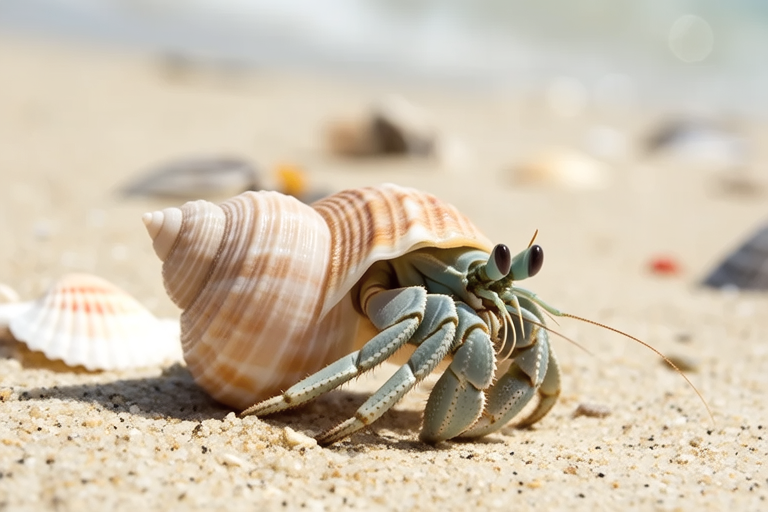
The Secret Life of Hermit Crabs: A Journey Into Their Unique Habits
Hermit crabs, often overlooked by beachgoers, have a fascinating and intricate existence that goes beyond their quirky appearance. These tiny creatures, known for their unique habit of borrowing discarded shells, are not only fascinating but also play a significant role in marine ecosystems. Let’s dive deep into the world of hermit crabs, exploring their shell selection process, social behaviors, nocturnal activities, methods of protection, dietary preferences, and their role in marine ecosystems.
Shell Selection: The Quest for the Perfect Home
One of the most intriguing aspects of hermit crab life is their constant search for the perfect shell. Unlike other crustaceans, hermit crabs do not have a hard exoskeleton to protect their soft bodies. Instead, they rely on second-hand shells from snails or other mollusks. This unique adaptation allows them to protect themselves from predators while still being able to grow and molt.
The shell selection process is an elaborate ritual. Hermit crabs assess potential homes based on size, shape, and weight. They often engage in what appears to be a competitive dance, jockeying for position around a desirable shell. Once a suitable shell is found, the crab will cautiously inspect it before making its final decision. Sometimes, this can lead to fierce battles among hermit crabs over prized shells, especially during high tide when competition is at its peak.
Interestingly, hermit crabs have been observed to exhibit preference for certain species of shells, such as those belonging to the genus Cypraea, commonly known as cowries. This preference might be due to the smooth texture and aesthetic appeal of these shells, which offer better protection against predators and environmental stressors.
Nocturnal Activities: The Nightlife of Hermit Crabs
Hermit crabs are predominantly nocturnal, meaning they are most active during the night. This behavior helps them avoid daytime predators like birds and fish. During the night, hermit crabs emerge from their shells to forage for food, explore their surroundings, and engage in social interactions.
Research has shown that hermit crabs are more active during the new moon phase, when there is less light pollution. This suggests that they may rely on natural light cycles to regulate their activity patterns. Scientists have also discovered that hermit crabs communicate with each other through vibrations and chemical signals, which they use to coordinate group movements and find food sources.
Social Behaviors: Community Living
Contrary to popular belief, hermit crabs are highly social creatures. They live in large communities, often sharing the same habitat. In these communities, hermit crabs engage in various social behaviors, including cooperative hunting, grooming, and even babysitting. This level of cooperation is unusual for invertebrates and highlights the complex social structures within hermit crab populations.
Hermit crabs have been observed engaging in what appears to be cooperative hunting. When food is scarce, groups of hermit crabs work together to capture prey, such as small fish or insects. This behavior demonstrates a level of intelligence and adaptability that is often underestimated in crustaceans.
Grooming is another important social behavior among hermit crabs. By cleaning each other, they remove parasites and dead skin, promoting better health and hygiene within the community. Additionally, some hermit crabs have been seen “babysitting” younger members of their group, protecting them from predators and ensuring their survival.
Methods of Protection: Surviving in a Dangerous World
Despite their protective shells, hermit crabs face numerous threats in their environment. To survive, they have developed several strategies for protection. One of the most effective methods is camouflage. Hermit crabs often decorate their shells with algae, pieces of coral, or sand, blending in with their surroundings and making it harder for predators to spot them.
In addition to camouflage, hermit crabs employ a variety of defensive tactics. Some species have evolved to carry toxic substances within their bodies, which they release when threatened. Others have developed sharp claws or spines along their abdomens, which they use to deter predators. These adaptations demonstrate the remarkable resilience and adaptability of hermit crabs in the face of environmental challenges.
Dietary Preferences: What Do Hermit Crabs Eat?
Hermit crabs are omnivorous scavengers, feeding on a wide range of organic matter, including decaying plants, small animals, and detritus. They play a crucial role in breaking down dead organisms and recycling nutrients back into the ecosystem. This process helps maintain the balance of marine environments and supports the growth of new life.
While hermit crabs primarily feed on detritus, they have also been observed consuming larger prey items, such as small fish or crabs. This opportunistic feeding behavior allows them to take advantage of available resources and ensures their survival in diverse environments.
The Role of Hermit Crabs in Marine Ecosystems
Hermit crabs are vital components of marine ecosystems, contributing to nutrient cycling, decomposition, and biodiversity. By breaking down dead organisms, hermit crabs help recycle nutrients and promote the growth of new life. Additionally, their presence in an ecosystem can indicate the overall health of the environment, as hermit crabs are sensitive to changes in water quality and temperature.
Scientists have also discovered that hermit crabs play a role in maintaining the structure of coral reefs. By burrowing into the reef, they create channels that allow water to circulate more freely, promoting the growth of corals and other marine organisms. This symbiotic relationship highlights the interconnectedness of marine ecosystems and the importance of every organism within them.
Adaptation Skills: Evolutionary Marvels
Hermit crabs are true evolutionary marvels, having adapted to their unique lifestyle over millions of years. Their ability to borrow shells and protect their soft bodies is just one example of their remarkable adaptability. Over time, hermit crabs have developed specialized appendages for carrying and manipulating shells, as well as sensory organs that allow them to detect vibrations and chemical signals in their environment.
One of the most fascinating aspects of hermit crab evolution is their ability to adapt to changing environmental conditions. For instance, some species have developed thicker shells to withstand increased predation pressure, while others have evolved to live in deeper waters where food is more abundant. These adaptations demonstrate the incredible flexibility and resilience of hermit crabs in the face of environmental challenges.
Myths and Misconceptions: Separating Fact from Fiction
There are many misconceptions surrounding hermit crabs, particularly regarding their care and behavior. One common myth is that hermit crabs require saltwater to survive. While hermit crabs do live in marine environments, they can thrive in freshwater habitats as well. Another misconception is that hermit crabs are solitary creatures. As we’ve seen, hermit crabs are highly social and often live in large communities.
It’s important to separate fact from fiction when it comes to hermit crabs. By understanding their true nature and behavior, we can better appreciate these fascinating creatures and ensure their conservation for future generations.
Conclusion: A World of Wonder
The secret life of hermit crabs is a world of wonder, filled with unique habits, social behaviors, and evolutionary adaptations. From their shell selection process to their nocturnal activities and methods of protection, hermit crabs have much to teach us about resilience, cooperation, and survival. By continuing to study and appreciate these creatures, we can gain valuable insights into the complexities of marine ecosystems and the importance of every organism within them.
