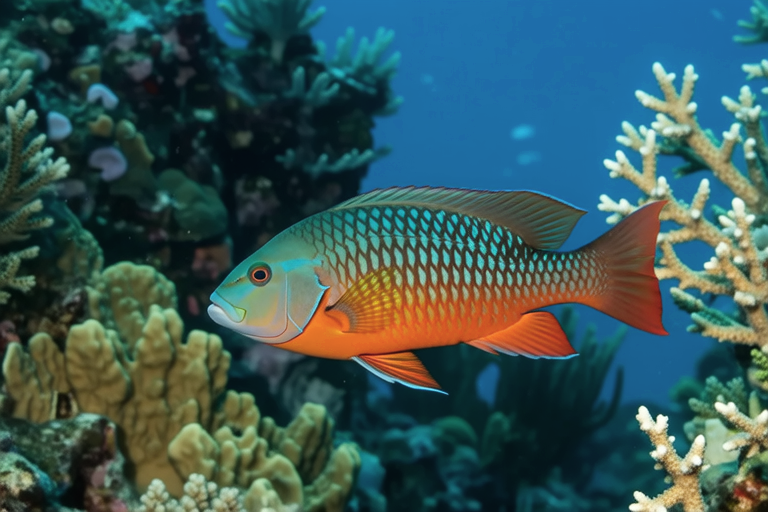
Parrot Fish: The Colorful Enigma of Marine Life
In the vast expanse of the ocean, where shades of blue and green dominate, there exists a creature that stands out like a beacon of color – the parrot fish. With its vibrant hues and striking patterns, this marine marvel is as much a spectacle as it is an ecological cornerstone. This article delves into the fascinating world of parrot fish, exploring their unique appearance, behavior, and their vital role in maintaining the health of coral reefs.
A Splash of Color in the Ocean Blue
The parrot fish is a true visual treat, a living kaleidoscope in the underwater realm. Their bodies are adorned with a dazzling array of colors, from electric blues and greens to fiery reds and oranges. These hues are often accompanied by intricate patterns, giving each species a distinct look. In contrast to the muted tones of the surrounding sea, the parrot fish’s vibrant palette serves as both a form of camouflage and a means of communication within their species. The vividness of their colors is particularly striking when they gather in schools, creating a mesmerizing display of movement and color.
Behavioral Traits and Ecological Role
Parrot fish exhibit a range of behaviors that make them fascinating subjects for marine biologists and enthusiasts alike. They are primarily diurnal creatures, meaning they are most active during the day. During this time, they play a crucial role in the maintenance of coral reefs, acting as nature’s gardeners. Parrot fish graze on algae that grow on coral surfaces, preventing it from overgrowing and smothering the coral polyps. This activity not only helps maintain the structural integrity of the reef but also contributes to the overall health of the ecosystem.
One of the most intriguing aspects of parrot fish behavior is their nocturnal transformation. As night falls, many species of parrot fish secrete a thick mucus cocoon around themselves. This cocoon is believed to mask their scent from potential predators, providing a layer of protection while they sleep. The process of creating this cocoon is complex and involves the fish expelling mucus from glands located near their gills. It’s a remarkable adaptation that underscores the parrot fish’s ingenuity in surviving in their challenging marine environment.
Feeding Habits and Reef Health
The diet of parrot fish is primarily composed of algae, which they consume using their beak-like jaws. These specialized mouths are equipped with rows of teeth fused together, forming a beak that can efficiently scrape algae off coral surfaces. The process of grazing by parrot fish is essential for the health of coral reefs. By keeping algae growth in check, they prevent the formation of algal mats that could otherwise suffocate coral polyps. Additionally, the parrot fish’s feeding habits contribute to the recycling of nutrients within the reef system, promoting biodiversity and resilience.
Fascinating Facts About Parrot Fish
Parrot fish come in various sizes, ranging from small species that measure just a few inches to larger ones that can exceed three feet in length. Their lifespan varies depending on the species, but generally, they can live for several years. Reproduction in parrot fish is a fascinating process. Most species practice external fertilization, where females release eggs and males release sperm into the water column. The eggs are then left to drift with the currents until they hatch. Some species, however, engage in more complex reproductive strategies, such as nest-building and parental care.
Conservation Efforts and Future Generations
The colorful enigma of marine life that is the parrot fish faces numerous threats, including habitat destruction, overfishing, and climate change. Coral reefs, the primary habitats of parrot fish, are under severe pressure due to human activities and environmental changes. Conservation efforts are underway to protect these vital ecosystems and the creatures that inhabit them. Initiatives include the establishment of marine protected areas, sustainable fishing practices, and raising awareness about the importance of reef conservation.
Preserving parrot fish and their ecosystems is crucial not only for the health of our oceans but also for future generations. These vibrant creatures are integral to the balance of marine ecosystems, and their preservation ensures the continued beauty and functionality of coral reefs. By supporting conservation efforts and advocating for sustainable practices, we can help ensure that the parrot fish remains a colorful enigma for generations to come.
In conclusion, the parrot fish is a testament to the incredible diversity and adaptability of marine life. From their vibrant colors to their vital role in reef ecosystems, these creatures offer a window into the wonders of the underwater world. By understanding and appreciating the parrot fish, we can better appreciate the delicate balance of our oceans and work towards their preservation.
