The Abyssinian Cat’s Unique History and Why It Matters
The Abyssinian cat is a breed known for its striking appearance and spirited demeanor. With a history that spans centuries, this breed has captured the hearts of cat lovers around the world. This article delves into the origins and early history of the Abyssinian, exploring theories about their geographical beginnings and historical significance. We will also discuss key traits and characteristics that have been preserved or evolved over time, linking these back to their history. Additionally, we will examine the breed’s genetic uniqueness and how it contributes to their distinct appearance and temperament. Finally, we will explore notable mentions or roles the Abyssinian cats have played in literature, art, or popular culture throughout history, concluding with the importance of understanding this history for current and prospective owners.
Origins and Early History
The exact origins of the Abyssinian cat remain somewhat shrouded in mystery, but there are several theories about their geographical beginnings. One popular theory suggests that the breed originated in ancient Egypt, where cats were revered as sacred animals. The Egyptian goddess Bastet was often depicted as a woman with the head of a cat, and many tombs and temples contained statues and paintings of cats. Some historians believe that the Abyssinian cat may have been brought to Europe by British soldiers returning from the Abyssinian Campaign in the 1860s, hence the name. However, DNA studies have shown that the Abyssinian cat shares common ancestry with Southeast Asian and East African wildcats, indicating that the breed likely has roots in these regions.
In ancient times, Abyssinian cats were highly valued for their hunting abilities. They were often kept in palaces and temples to control rodent populations. Their agility and sharp senses made them ideal companions for humans, and they were considered symbols of good luck and protection. In some cultures, it was believed that owning an Abyssinian cat could ward off evil spirits and bring prosperity to one’s home.
Key Traits and Characteristics
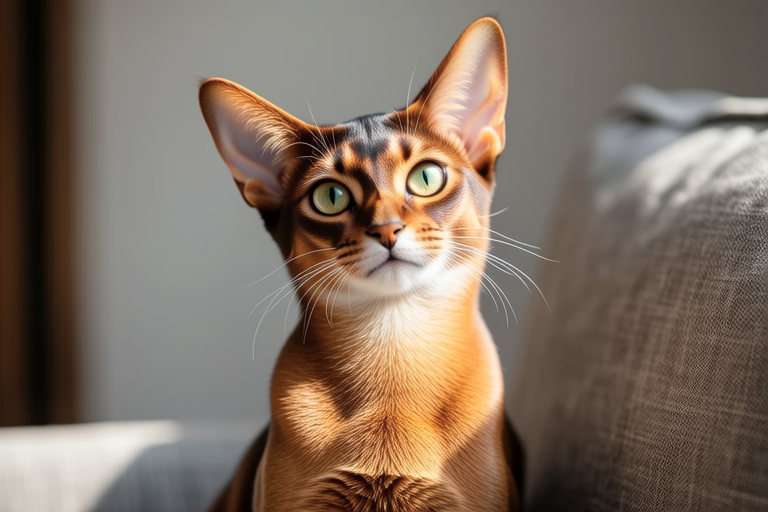
Over time, certain traits and characteristics have been preserved or evolved within the Abyssinian breed. These cats are known for their sleek, muscular bodies and large, expressive eyes. Their coats are typically ticked, meaning each hair has bands of color, giving them a unique and distinctive appearance. The most common colors include ruddy (a rich reddish-brown), blue (a cool gray), fawn (a soft beige), and chocolate (a deep brown).
Abyssinians are also known for their playful and curious nature. They are active cats that enjoy climbing and exploring, making them excellent companions for families who are willing to provide them with plenty of stimulation. Their intelligence and problem-solving skills make them adept at learning tricks and solving puzzles. These traits can be traced back to their ancestors, who needed to be quick and resourceful hunters in order to survive.
Genetic Uniqueness
The Abyssinian cat’s genetic makeup is what sets it apart from other breeds. Studies have shown that the breed carries a recessive gene that causes the ticking pattern in their fur. This gene is believed to have originated in Southeast Asia, where it was passed down through generations of wildcats. The ticking pattern gives Abyssinians their characteristic appearance and helps them blend into their environment, making them excellent hunters.
Another unique aspect of the Abyssinian’s genetic makeup is their coat texture. Their fur is short and fine, but it has a silky feel that is unlike any other breed. This texture is due to the presence of guard hairs, which give the coat its lustrous appearance. The combination of ticking and guard hairs creates a coat that is both beautiful and functional, allowing the cats to thrive in a variety of environments.
Literature, Art, and Popular Culture
Abyssinian cats have made appearances in literature, art, and popular culture throughout history. In literature, they have been featured in novels and poems, often symbolizing grace, beauty, and mystery. One famous example is the poem “The Abyssinian” by George Gordon Byron, which describes a cat with a “tiger eye” and a “lion heart.” In more recent years, Abyssinians have appeared in children’s books and graphic novels, where they are portrayed as brave and loyal companions.
In art, Abyssinian cats have been depicted in paintings and sculptures, often alongside human figures. Their elegant appearance and expressive faces make them ideal subjects for artists. One notable example is the painting “The Abyssinian Cat” by Sir Edwin Landseer, which shows a cat sitting gracefully on a table, surrounded by flowers and fruit. In popular culture, Abyssinians have been featured in movies, television shows, and commercials, where they are used to represent elegance and sophistication.
Why Understanding This History Matters
Understanding the history of the Abyssinian cat is important for current and prospective owners, as well as for appreciating the breed’s contributions to feline genetics and culture. For owners, knowing the breed’s history can help them better understand their cat’s behavior and needs. Abyssinians are active and intelligent cats that require plenty of stimulation, so owners who are familiar with their history can provide the right kind of care and attention.
For those interested in feline genetics, the Abyssinian cat provides valuable insights into the evolution of domesticated cats. By studying the breed’s genetic makeup, researchers can learn more about how certain traits are inherited and how they contribute to the overall health and well-being of the species. This knowledge can be applied to other breeds of cats and even to other animals, helping to advance our understanding of genetics and biology.
Finally, understanding the history of the Abyssinian cat allows us to appreciate its cultural significance. From ancient Egypt to modern-day popular culture, the breed has played an important role in shaping our perceptions of cats and their place in society. By recognizing the contributions of the Abyssinian cat, we can gain a deeper appreciation for the rich and diverse world of feline companionship.
In conclusion, the Abyssinian cat is a breed with a fascinating and complex history. From its origins in ancient Egypt to its role in modern-day popular culture, the breed has captured the hearts of people around the world. By understanding the breed’s history, we can better appreciate its unique traits and characteristics, as well as its contributions to feline genetics and culture. Whether you are a current owner, a prospective owner, or simply a cat enthusiast, the history of the Abyssinian cat is sure to captivate and inspire.
