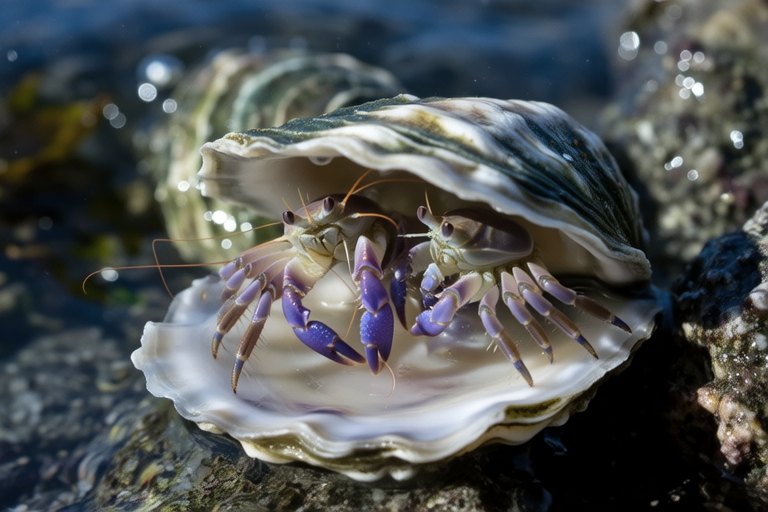
The Unique Coexistence: Host Shellfish and Their Pea Crab Roommates
In the vast and intricate world of marine biology, one of the most fascinating relationships is that between pea crabs and their host shellfish. This symbiotic partnership, where both organisms benefit from each other’s presence, is a prime example of nature’s remarkable ability to create mutually beneficial arrangements. This article delves into the details of this unique coexistence, exploring the biological, ecological, and geographical aspects of this relationship.
The Players in the Symbiosis
Pea crabs (Pinnotheridae) are small crustaceans named for their resemblance to peas. They belong to a family of crabs that have adapted to live within the bodies of various mollusks, including oysters, scallops, and mussels. The host shellfish provide a protective environment for the pea crabs, who, in turn, offer certain advantages to their hosts. The pea crabs can vary in size and color depending on the species, but they are typically small enough to fit comfortably inside their host’s shell.
Shellfish, such as oysters and scallops, are bivalve mollusks with two hinged shells. These animals are filter feeders, extracting food particles from the water. They play a crucial role in marine ecosystems by filtering large volumes of water, which helps maintain water quality and supports the growth of phytoplankton, a vital component of the oceanic food web.
The Benefits of the Partnership
The symbiotic relationship between pea crabs and their host shellfish is characterized by mutual benefits. For the pea crabs, the primary advantage is protection. Living within the shell provides them with a safe haven from predators, such as larger fish and birds. The hard, calcified structure of the shell acts as a formidable barrier against these threats, allowing the pea crabs to lead relatively peaceful lives.
Additionally, the pea crabs benefit from increased mobility. While they are capable of swimming short distances, residing within the host shellfish allows them to move more efficiently through the water. The constant movement of the host shellfish, particularly in the case of scallops, which swim by rapidly opening and closing their shells, provides the pea crabs with a means of transportation that they could not achieve on their own.
For the host shellfish, the presence of pea crabs can have several positive effects. One of the most significant benefits is the potential enhancement of water flow around the gills. As pea crabs move within the shell, they may inadvertently increase the water circulation, improving the efficiency of the host’s respiration and feeding processes. Furthermore, the pea crabs consume detritus and parasites that might otherwise harm the host, thus contributing to its overall health.
Geographical Distribution
This symbiotic relationship is widespread across the globe, with recorded instances in both temperate and tropical waters. Pea crabs have been found in coastal regions of North America, Europe, Asia, and Australia. In North America, species like Pinnixa faba are commonly found in the eastern coast, while Pinnixa littoralis inhabits the western coast. In Europe, the Pinnixa granulata is prevalent in the Mediterranean Sea.
The geographical distribution of this symbiosis highlights the adaptability of both the pea crabs and their host shellfish. Despite the varying environmental conditions, these organisms have successfully established this unique relationship across diverse habitats. The ability to thrive in different regions underscores the resilience and evolutionary success of this partnership.
Threats and Challenges
Despite the benefits derived from this symbiotic relationship, there are several threats and challenges that could disrupt this delicate balance. Human activities, such as overfishing and pollution, pose significant risks to both the pea crabs and their host shellfish. Overfishing can reduce the population of host shellfish, thereby limiting the available habitat for pea crabs. Pollution, on the other hand, can introduce harmful substances into the marine environment, affecting the health and survival of both partners.
Climate change also presents a challenge to this symbiotic relationship. Rising sea temperatures and ocean acidification can negatively impact the physiology and behavior of both pea crabs and their host shellfish. Changes in water temperature can alter the metabolic rates of the organisms, potentially leading to mismatches in their reproductive cycles. Ocean acidification, caused by increased levels of carbon dioxide in the atmosphere, can weaken the calcium carbonate structures of the host shellfish, making them more vulnerable to predation and environmental stressors.
Another threat to this relationship comes from invasive species. Non-native species can outcompete native pea crabs for resources and habitat, disrupting the existing balance. Additionally, invasive species can introduce new diseases or parasites that could affect the health of both the pea crabs and their host shellfish.
Scientific Insights
Scientists continue to study the intricacies of this symbiotic relationship to better understand its mechanisms and implications. Recent research has focused on the genetic adaptations of pea crabs that allow them to thrive within the confines of their host shellfish. Studies have shown that pea crabs possess specific genes that enable them to withstand the physical and chemical conditions within the host’s body.
Furthermore, researchers are investigating the impact of this symbiosis on the broader marine ecosystem. By studying the interactions between pea crabs and their host shellfish, scientists hope to gain insights into the dynamics of marine communities and the factors that influence their stability. Understanding these relationships can inform conservation efforts aimed at protecting marine biodiversity and ensuring the sustainability of marine ecosystems.
Conclusion
The symbiotic relationship between pea crabs and their host shellfish is a testament to the complexity and beauty of life in the oceans. This unique coexistence, characterized by mutual benefits, highlights the importance of biodiversity and the intricate web of life that exists beneath the waves. As we continue to explore and understand these relationships, it becomes increasingly clear that the health of our oceans depends on the preservation of these delicate balances.
By recognizing and appreciating the symbiotic relationships within marine ecosystems, we can work towards sustainable practices that protect not only individual species but entire ecosystems. The future of our oceans relies on our commitment to understanding and safeguarding the intricate connections that define marine life.
