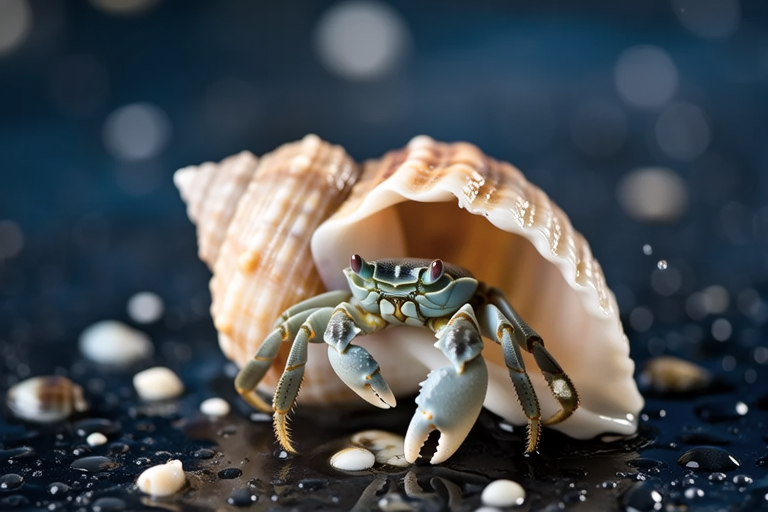
The Fascinating World of Pea Crabs: A Dive Into Their Complex Lives
Pea crabs (Pinnotheres) may be small, but their lives are anything but simple. These tiny crustaceans live in a world of symbiosis, where they rely on their hosts for protection and food. Despite their diminutive size, pea crabs have evolved some remarkable adaptations that allow them to thrive in their unique environments. Let’s explore the intricate life cycle, habitat, and symbiotic relationships of these fascinating creatures.
The Life Cycle of Pea Crabs
The life cycle of pea crabs is a delicate balance between survival and reproduction. As with most crustaceans, pea crabs begin life as eggs laid by the female. Once hatched, the larvae enter the planktonic stage, floating freely in the ocean currents. This period of their life is fraught with danger, as they must avoid predators while seeking out a suitable host. The larvae’s survival hinges on finding a host quickly, as their free-swimming phase is brief.
Once a larva finds a host, it undergoes metamorphosis, transforming into its adult form. This transformation is critical, as it marks the beginning of the crab’s symbiotic relationship with its host. The newly transformed pea crab must then navigate the complexities of living inside its host, which can include everything from finding a safe place to hide to learning how to feed without being detected.
Habitats and Hosts
Pea crabs are found in various marine environments, including estuaries, coastal waters, and even deep-sea habitats. They are particularly common in areas where their preferred hosts—such as oysters, mussels, and sea cucumbers—are abundant. These environments provide both protection and food, allowing pea crabs to thrive despite their small size.
The choice of host is crucial for pea crabs, as it determines their access to resources and safety. Oysters and mussels, for example, offer a secure home within their shells, while sea cucumbers provide a rich source of nutrients. In return, pea crabs contribute to the health of their hosts by consuming parasites and dead tissue, helping to keep their environment clean and healthy.
Symbiotic Relationships
Pea crabs have evolved a unique relationship with their hosts, known as commensalism, where one species benefits without affecting the other. In this case, the pea crabs benefit from the protection and resources provided by their hosts, while the hosts are largely unaffected. However, recent studies suggest that this relationship might be more complex than previously thought.
Research has shown that pea crabs can have both positive and negative impacts on their hosts. While they help control parasitic infections, they can also compete with their hosts for food, potentially reducing the host’s growth rate. This dynamic relationship highlights the complexity of pea crabs’ interactions with their environment and underscores the importance of understanding these relationships in ecological studies.
Adaptations for Survival
Pea crabs have developed several adaptations that allow them to survive and thrive in their unique habitats. One of the most notable adaptations is their ability to fit perfectly within the shells of their hosts. By doing so, they gain protection from predators and harsh environmental conditions. Additionally, their small size allows them to move through tight spaces within their hosts, giving them access to food sources that larger predators cannot reach.
Another adaptation is their reproductive strategy. Female pea crabs can produce thousands of eggs, ensuring that at least some of their offspring will find suitable hosts. This high reproductive rate increases the chances of survival for the species as a whole, even if many individuals do not survive to adulthood.
Role in Ecosystems
Pea crabs play a vital role in maintaining the health of their ecosystems. By controlling parasitic infections and consuming dead tissue, they help keep their hosts healthy and prevent the spread of disease. This, in turn, benefits the entire ecosystem, as healthy hosts contribute to the overall biodiversity of the area.
Recent scientific discoveries have shed light on the importance of pea crabs in their ecosystems. For example, studies have shown that the presence of pea crabs can significantly reduce the prevalence of certain parasites in their hosts, leading to healthier populations of both the hosts and the surrounding wildlife. This highlights the interconnectedness of marine ecosystems and the crucial role that even small organisms like pea crabs can play.
Fascinating Facts About Pea Crabs
Pea crabs are full of surprises, and there are many fascinating facts that showcase their complexity:
- Size Matters: Despite their name, pea crabs can vary greatly in size, ranging from just a few millimeters to over an inch in length. Their size is directly related to the size of their host, with larger hosts supporting bigger pea crabs.
- Gender Differences: Male and female pea crabs have distinct roles within their hosts. Females spend most of their time inside the host, protecting their eggs, while males are more active, venturing outside to mate. This division of labor ensures the survival of both the crab and its offspring.
- Host Specificity: Different species of pea crabs are often associated with specific hosts. For example, Pinnotheres pisum is commonly found in oysters, while Pinnotheres granulatus prefers mussels. This specificity highlights the close evolutionary relationship between pea crabs and their hosts.
- Unique Reproduction: Pea crabs have a unique reproductive strategy involving multiple mating events. Females can store sperm from different males, allowing for genetic diversity in their offspring. This strategy increases the chances of producing offspring that are better adapted to their environment.
Interactions With Other Species
Pea crabs interact with a wide range of species within their ecosystems, forming complex relationships that extend beyond their primary hosts. For example, they may share space with other symbionts, such as bacteria or other small organisms, within the same host. These interactions can influence the health and behavior of all involved parties, creating a web of relationships that is still not fully understood.
Additionally, pea crabs may face competition from other species for access to hosts. This competition can lead to conflicts, where crabs may engage in aggressive behaviors to establish dominance and secure their position within the host. Understanding these interactions is crucial for gaining a comprehensive view of the role pea crabs play in their ecosystems.
Conclusion
Pea crabs may be small, but their lives are far from simple. From their intricate life cycles to their complex symbiotic relationships, these tiny crustaceans have evolved a range of adaptations that allow them to thrive in their unique environments. Recent scientific discoveries continue to reveal new insights into the role pea crabs play in their ecosystems, highlighting the importance of studying even the smallest organisms.
As we continue to learn more about pea crabs, it becomes clear that they are far more complex than they appear. Their interactions with their hosts and the wider ecosystem demonstrate the intricate web of relationships that exist in nature. By understanding these relationships, we can gain valuable insights into the health and functioning of marine ecosystems, ultimately contributing to the conservation of these vital environments.
