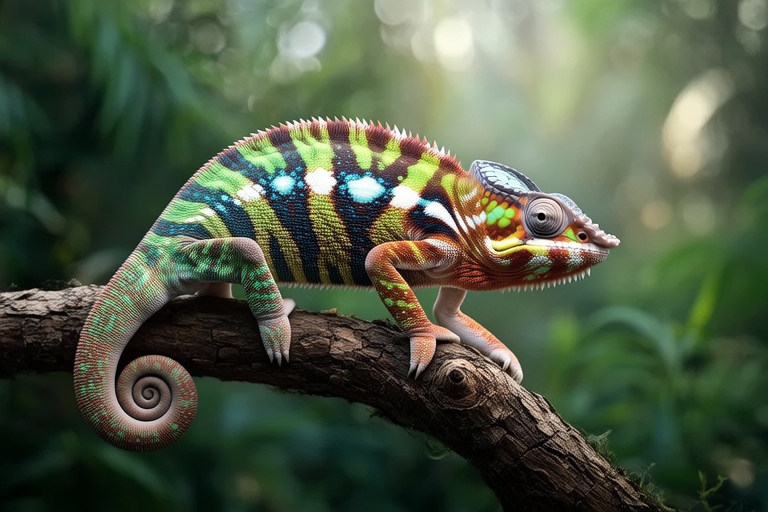
How Chameleons Change Colors and Why It Matters
Introduction
Chameleons have long captured the imagination of humans with their remarkable ability to change colors. Often seen as masters of disguise, these lizards are much more than just camouflaging creatures. Their color-changing abilities play crucial roles in communication, temperature regulation, and survival. This article delves into the fascinating biological mechanisms behind chameleon color changes, dispels common myths, and highlights the importance of these adaptations in their lives.
1. The Biological Process of How Chameleons Change Colors
The primary mechanism behind a chameleon’s color change lies within specialized cells called chromatophores and iridophores. Chromatophores are pigment-containing cells found in the skin of many animals, including chameleons. They come in different types, each containing a specific pigment: xanthophores (yellow), erythrophores (red), and guanophores (blue).
When a chameleon wants to change its color, it does so by expanding or contracting these chromatophores. For example, if a chameleon wishes to appear darker, it expands the black melanophores to cover more surface area. Conversely, if it desires to lighten up, it contracts these cells. This expansion and contraction are controlled by hormones and neural signals from the brain.
Iridophores, another type of cell found beneath the chromatophores, are responsible for reflecting light and creating structural colors. These cells contain platelets that can be stacked or spread apart, altering the way light interacts with them. By manipulating these platelets, chameleons can create vivid blues, greens, and other iridescent hues that are not due to pigments but rather to the physical structure of the cells.
Together, chromatophores and iridophores allow chameleons to produce a wide spectrum of colors, ranging from subtle shades to vibrant displays. This complex interplay of cells is what makes chameleons such versatile color changers.
2. Common Misconceptions About Chameleon Color Changes
One of the most prevalent misconceptions about chameleons is that they change colors solely for camouflage. While camouflage is indeed one reason for their color shifts, it is far from the only one. In reality, chameleons change colors for various purposes, including communication and temperature regulation.
Another common myth is that chameleons can instantly change colors like a light switch. In fact, the process takes time, often several minutes, depending on the desired shade and the chameleon’s physiological state. This gradual change is due to the complex cellular processes involved in expanding and contracting chromatophores and iridophores.
Chameleons also change colors to regulate their body temperature. Darker colors absorb more heat, while lighter colors reflect it. By adjusting their color, chameleons can optimize their internal temperature, ensuring they remain comfortable and active. This thermoregulation is particularly important in environments where temperatures fluctuate significantly throughout the day.
Moreover, color changes play a vital role in communication. Chameleons use their vibrant displays to signal aggression, submission, or readiness to mate. Males, in particular, use color changes during territorial disputes and courtship displays, showcasing their fitness and dominance to potential mates or rivals.
3. The Significance of Color Changes in Chameleons’ Survival, Mating Rituals, and Adaptation to Their Environment
Color changes are essential for chameleons’ survival, helping them blend into their surroundings and avoid predators. However, this camouflage is not always about hiding. Sometimes, chameleons use their color changes to stand out, especially during mating rituals and territorial disputes. These displays can be intimidating to rivals or attractive to potential mates, enhancing their chances of reproduction.
During mating season, male chameleons put on elaborate color displays to attract females. These displays can involve bright flashes of color, rapid changes, and even specific patterns. Females, too, can change colors to indicate their receptiveness or rejection of a suitor. This communication through color ensures that mating occurs efficiently and effectively, contributing to the species’ reproductive success.
In addition to mating, color changes help chameleons adapt to their environment. Chameleons inhabit diverse habitats, from lush rainforests to arid deserts. Their ability to adjust their color allows them to thrive in these varied conditions. For instance, in dense foliage, a green chameleon might blend in perfectly, while in a rocky desert, a brown or gray chameleon would be less conspicuous.
Furthermore, color changes enable chameleons to manage stress and maintain homeostasis. When stressed, chameleons may display darker or more intense colors as a form of self-soothing or to signal distress to others. This response helps them cope with challenging situations, whether it’s a predator approaching or environmental stressors.
Overall, the ability to change colors is a multifaceted adaptation that contributes significantly to a chameleon’s survival, reproduction, and overall well-being. It is a testament to the incredible complexity and adaptability of nature.
Conclusion
Chameleons are truly remarkable creatures, and their ability to change colors is just one aspect of their fascinating biology. By understanding the intricate mechanisms behind their color changes and recognizing the various reasons for these shifts, we gain a deeper appreciation for these lizards and the vital role their adaptations play in their lives. Whether for camouflage, communication, or temperature regulation, chameleons’ color-changing abilities are a marvel of evolution that continues to captivate and inspire.
