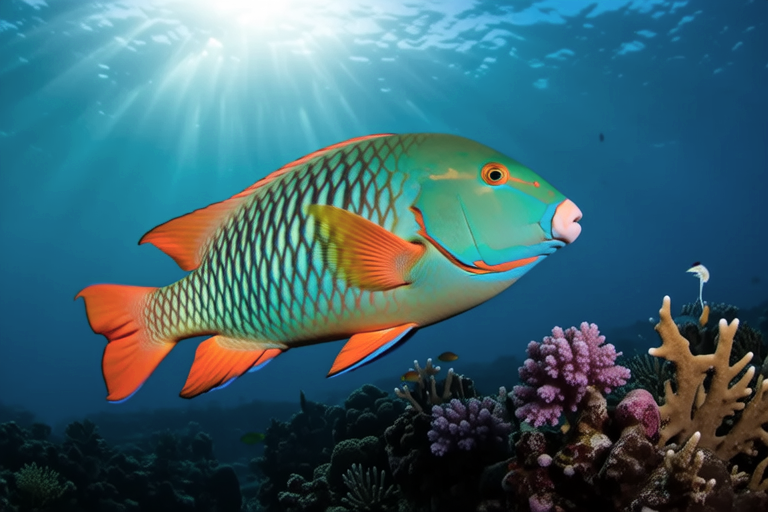
Unleashing the Beauty: A Dive into the World of Parrot Fish
The ocean is a vast, mysterious realm that houses a myriad of colorful and fascinating creatures. Among them, parrot fish stand out with their striking appearance and unique behaviors. These fish are not only visually stunning but also play a crucial role in maintaining the health of marine ecosystems. This article delves into the world of parrot fish, exploring their vibrant colors, feeding habits, behaviors, and the challenges they face in their natural habitats.
Unique Characteristics and Vibrant Colors
Parrot fish, belonging to the family Scaridae, are named after their beak-like mouths and bright, often iridescent, colors. They come in a dazzling array of hues, from the electric blue of the midnight parrotfish to the neon green of the stoplight parrotfish. Their vivid colors serve various purposes, including camouflage, attracting mates, and warding off predators. The most notable feature of these fish is their ability to change color depending on their mood or stage of life, making each individual a living work of art.
A Role in Marine Ecosystems
Parrot fish are vital components of coral reef ecosystems. They feed primarily on algae that grow on coral reefs, which helps prevent the overgrowth of algae that could otherwise smother and kill the coral. Their diet consists mainly of algae, which they scrape off rocks and corals using their strong beaks. This feeding behavior is not only essential for the fish’s survival but also plays a significant role in maintaining the balance of the reef ecosystem. By keeping the algae in check, parrot fish help ensure that corals can thrive and continue to provide habitat for countless other marine species.
Feeding Habits and Coral Reef Health
The feeding habits of parrot fish have a direct impact on the health of coral reefs. As they graze on algae, they inadvertently break down and digest coral skeletons, excreting fine sand particles. This process, known as bioerosion, contributes significantly to the formation of sandy beaches and lagoons around tropical islands. Without parrot fish, many of the world’s beaches might look very different, as their contribution to sediment production is substantial. Thus, these fish not only maintain the health of coral reefs but also shape the very landscape of coastal areas.
Behavior and Sleep Patterns
Parrot fish exhibit fascinating behaviors, one of the most intriguing being their nocturnal sleeping habits. To protect themselves from nighttime predators, they create mucus cocoons out of mucus secreted from glands near their gills. This cocoon not only provides a physical barrier against potential attackers but also masks the fish’s scent, making it less detectable. Additionally, some researchers believe that the cocoon may serve as a deterrent to certain parasites. This unique adaptation showcases the ingenuity of nature in ensuring the survival of these beautiful creatures.
Challenges in Natural Habitats
Despite their importance, parrot fish face numerous challenges in their natural habitats. One of the primary threats comes from human activities, particularly pollution and overfishing. Pollution, especially from agricultural runoff and sewage, can lead to excessive algal growth, which disrupts the delicate balance of the reef ecosystem. Overfishing, driven by demand for their brightly colored flesh, has led to significant declines in parrot fish populations in many regions. Moreover, climate change poses an additional threat by causing coral bleaching, which can reduce the availability of food for parrot fish and further degrade their habitats.
The Importance of Conservation Efforts
The conservation of parrot fish is crucial for the preservation of coral reefs and the overall health of marine ecosystems. Protecting these fish involves implementing sustainable fishing practices, creating marine protected areas, and raising awareness about the importance of reef conservation. By supporting initiatives aimed at reducing pollution and promoting responsible fishing, we can help ensure the survival of parrot fish and the ecosystems they inhabit. It is our responsibility to safeguard these magnificent creatures for future generations.
In conclusion, parrot fish are not just beautiful additions to the underwater world; they are vital contributors to the health and diversity of coral reefs. Their unique characteristics, vibrant colors, and important roles in marine ecosystems make them fascinating subjects of study and admiration. By understanding and appreciating these creatures, we can better appreciate the intricate balance of life beneath the waves and the urgent need to protect it.
