The Genetic Makeup Behind Bengal Cats’ Striking Patterns
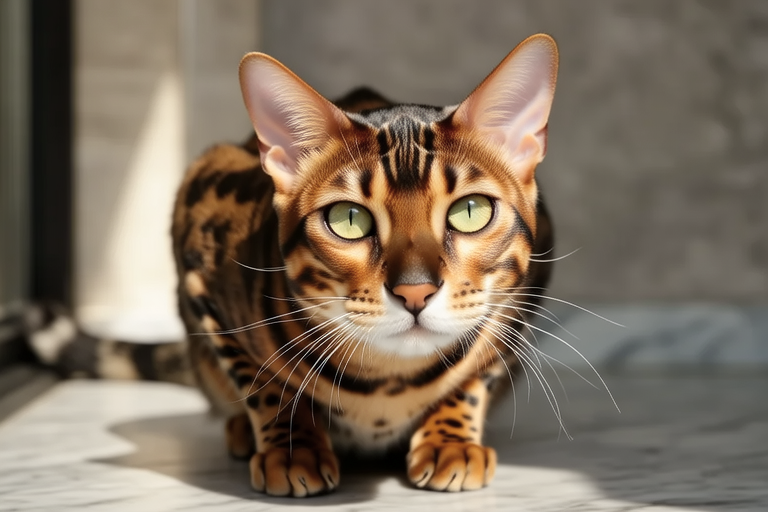
Bengal cats are renowned for their distinctive spotted and striped coats, which resemble those of wild leopards. The intricate patterns on these domesticated felines are a result of complex genetic interactions. Understanding the genetic basis of these patterns provides valuable insight into both the natural history and the selective breeding practices that have shaped the Bengal breed.
Genetic Basis of Bengal Cat Patterns
The development of Bengal cat patterns is influenced by several genes, each contributing uniquely to the final appearance. Among these, the Taqpep gene plays a pivotal role. This gene encodes a protein involved in the processing of melanocyte-stimulating hormone (MSH), which regulates pigmentation. Variants of the Taqpep gene are associated with the formation of distinct spotting patterns. When this gene is expressed at certain levels, it results in the characteristic rosette patterns seen in many Bengal cats, mimicking the coat of the Asian Leopard Cat (ALC).
In addition to the Taqpep gene, other genes contribute to the variation in Bengal cat patterns. The agouti gene influences whether the fur is banded or solid, while the kit ligand gene controls the density and distribution of spots. These genes interact in a complex manner, producing a wide range of coat patterns, from large, bold spots to intricate, small rosettes.
Historical Breeding Practices
The Bengal breed originated from the crossbreeding of domestic cats with the Asian Leopard Cat (ALC). Jean Mill, an American breeder, began the process in the 1960s, aiming to create a domestic cat with the appearance of a wild cat but with the temperament of a house pet. Initially, the offspring of these crosses were sterile, but through continued selective breeding, fertile generations were eventually produced.
The introduction of ALC genetics into the Bengal breed has significantly impacted its physical characteristics. The first-generation hybrids, known as F1 Bengals, exhibit more pronounced wild traits, including larger size and stronger physical features. As subsequent generations are bred back to domestic cats, the offspring become increasingly similar to their domestic counterparts in terms of temperament and behavior, yet retain the striking coat patterns of their wild ancestors.
Behavior and Health Influences
The genetic traits that produce the Bengal’s unique coat also influence its behavior and health. Bengal cats are often described as active, playful, and intelligent, traits that may be linked to their wild heritage. Their high energy levels and curiosity can make them excellent companions for families and individuals seeking an interactive pet. However, these traits also mean they require ample mental and physical stimulation to thrive.
Health-wise, the genetic diversity introduced by the ALC has contributed to a robust breed. However, some health issues are prevalent in Bengal cats, including heart disease and hip dysplasia. Selective breeding practices have aimed to minimize these risks, and ongoing genetic research continues to identify markers associated with these conditions, allowing for more informed breeding decisions.
Variations in Coat Patterns
The Bengal coat patterns vary widely, with some cats displaying large, bold spots, while others have smaller, more intricate markings. These variations are significant because they reflect the underlying genetic diversity within the breed. For instance, the presence of large spots might indicate a higher expression of the Taqpep gene, whereas smaller, more numerous spots could suggest a different genetic profile.
Understanding these variations is crucial for breeders who aim to maintain genetic diversity and avoid inbreeding. By carefully selecting breeding pairs based on their genetic profiles, breeders can produce Bengal cats with diverse and vibrant coat patterns, ensuring the continued health and vitality of the breed.
Future Prospects of Bengal Cat Genetics Research
The future of Bengal cat genetics research holds great promise for enhancing our understanding of feline diversity and improving the health and well-being of these animals. Advances in genetic sequencing technologies now allow researchers to map the entire genome of Bengal cats, identifying specific genes responsible for various traits.
This knowledge will enable more precise breeding practices, helping to reduce the incidence of inherited diseases and enhance desirable traits such as coat patterns and temperament. Additionally, ongoing research may uncover new insights into the evolutionary history of the Bengal breed, providing a deeper understanding of the genetic factors that have shaped its unique characteristics.
The implications of this research extend beyond the Bengal breed, offering valuable lessons for the broader field of animal genetics. By studying the genetic makeup of Bengal cats, researchers can gain insights into the mechanisms that drive coat pattern development in other species, potentially leading to breakthroughs in veterinary medicine and conservation biology.
Conclusion
The striking spots and stripes of Bengal cats are a testament to the intricate interplay of genetics and selective breeding. From the Taqpep gene’s role in creating leopard-like coats to the historical introduction of ALC genetics, the genetic makeup of Bengal cats is both fascinating and complex. These genetic traits not only influence their appearance but also shape their behavior and health.
As research continues to unravel the mysteries of Bengal cat genetics, we can expect further advancements in breeding practices, improved health outcomes, and a greater appreciation for the genetic diversity within the breed. The future prospects of Bengal cat genetics research hold immense potential, promising new discoveries that will benefit both the cats themselves and the broader field of animal science.
