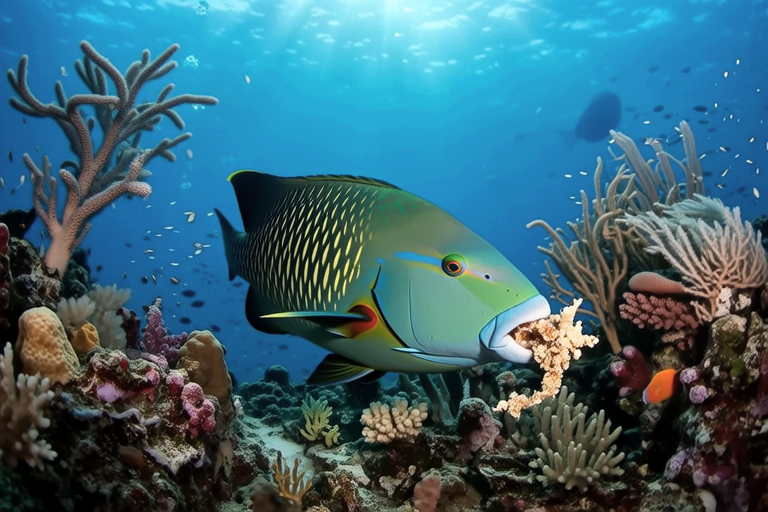
Underwater Gardens: How Parrot Fish Are Nature’s Architects
In the vast ocean, where sunlight barely penetrates the deep blue waters, there exists a world teeming with life. Coral reefs, often referred to as ‘underwater gardens,’ are some of the most biodiverse ecosystems on Earth. Among the myriad of creatures that inhabit these vibrant underwater landscapes, parrot fish stand out as nature’s architects. These colorful, fascinating fish play a crucial role in maintaining the health and balance of coral reef ecosystems.
The Unique Behavior of Parrot Fish
Parrot fish possess a unique set of behaviors that make them indispensable to the survival of coral reefs. One of their most notable habits is their consumption of algae. These algae, if left unchecked, can smother corals and prevent them from thriving. Parrot fish use their strong, beak-like jaws to scrape algae off the surface of coral reefs, leaving behind clean, healthy surfaces for new polyps to grow. This activity not only ensures the cleanliness of the reef but also helps in promoting the growth of diverse coral species.
But that’s not all; parrot fish have another surprising trick up their sleeves. As they consume algae, they also ingest small pieces of coral. The calcium carbonate in the coral passes through their digestive system and is excreted as fine sand. This process, known as bioerosion, plays a critical role in shaping the physical structure of reefs and contributing to the formation of islands. Over time, the accumulated sand from millions of parrot fish creates sandy beaches and even entire islands. This phenomenon highlights the interconnectedness of marine and terrestrial ecosystems.
Scientific Insights on Biodiversity and Health
The activities of parrot fish have profound implications for the biodiversity and overall health of coral reef ecosystems. By keeping algae in check, parrot fish ensure that corals receive sufficient sunlight for photosynthesis, which is essential for their survival. This, in turn, supports a wide range of marine life that depends on corals for shelter and food. From tiny shrimp to large groupers, the intricate web of life in coral reefs thrives due to the efforts of parrot fish.
Moreover, the sand produced by parrot fish contributes to the formation of new habitats. These sandy areas provide breeding grounds for various species of fish and invertebrates, further enhancing the biodiversity of the reef. Scientific studies have shown that areas with higher populations of parrot fish tend to have greater species richness and healthier coral cover compared to those where parrot fish are scarce.
Recent research has also shed light on the importance of parrot fish in combating climate change. As they graze on algae, they help maintain the resilience of coral reefs against rising sea temperatures and ocean acidification. Healthy, well-maintained reefs are better equipped to withstand environmental stressors, ensuring the long-term survival of marine ecosystems.
Threats to Parrot Fish Populations
Despite their vital role in maintaining coral reef ecosystems, parrot fish face numerous threats that jeopardize their survival. Overfishing is one of the primary concerns. In many parts of the world, parrot fish are prized for their colorful flesh and are heavily targeted by commercial fisheries. This has led to significant declines in their populations, particularly in regions where fishing regulations are lax or poorly enforced.
Habitat destruction is another major threat. Coastal development, pollution, and climate change all contribute to the degradation of coral reefs, which are the primary habitat for parrot fish. As reefs become damaged or destroyed, parrot fish lose their homes and sources of food, further reducing their numbers. Additionally, the increased frequency and intensity of storms, exacerbated by climate change, can cause physical damage to reefs, making it harder for parrot fish to find suitable areas to graze.
The decline in parrot fish populations has far-reaching consequences for marine environments. Without enough parrot fish to keep algae in check, coral reefs become more susceptible to algal overgrowth, which can lead to the death of corals and the loss of biodiversity. This, in turn, affects the livelihoods of communities that depend on healthy reefs for fishing and tourism. The economic and social impacts of losing parrot fish extend beyond just the immediate ecosystem, highlighting the importance of conserving these remarkable fish.
Conservation Efforts and Future Outlook
Recognizing the critical role of parrot fish in maintaining coral reef ecosystems, various conservation efforts are underway to protect these valuable species. Marine protected areas (MPAs) have been established in many regions to safeguard parrot fish and their habitats. These protected zones restrict fishing activities, allowing parrot fish populations to recover and thrive. Additionally, sustainable fishing practices, such as catch limits and size restrictions, are being implemented to ensure that parrot fish are harvested in a way that does not harm their populations.
Public awareness campaigns and education initiatives are also playing a crucial role in conserving parrot fish. By raising awareness about the importance of these fish and the threats they face, people are becoming more informed and engaged in protecting marine ecosystems. Many communities are now taking active steps to reduce pollution and promote sustainable practices that benefit both parrot fish and other marine life.
Looking ahead, the future of parrot fish and coral reefs remains uncertain. However, with continued conservation efforts and a commitment to addressing the root causes of environmental degradation, there is hope for the recovery of these vital ecosystems. By working together to protect parrot fish and the underwater gardens they help create, we can ensure the survival of these magnificent creatures and the countless species that depend on them.
Conclusion
Parrot fish are truly nature’s architects, playing a pivotal role in maintaining the health and beauty of coral reef ecosystems. Their unique behavior of consuming algae and excreting sand highlights the intricate balance of marine life and the delicate interplay between different species. As we continue to explore and understand the ocean, it becomes increasingly clear that the survival of parrot fish is essential for the preservation of our underwater gardens.
By recognizing the value of these remarkable fish and taking action to protect them, we can ensure that future generations will have the opportunity to witness the wonders of coral reefs and the incredible biodiversity they support. Let us embrace our role as stewards of the ocean and work together to safeguard the underwater gardens that parrot fish call home.
