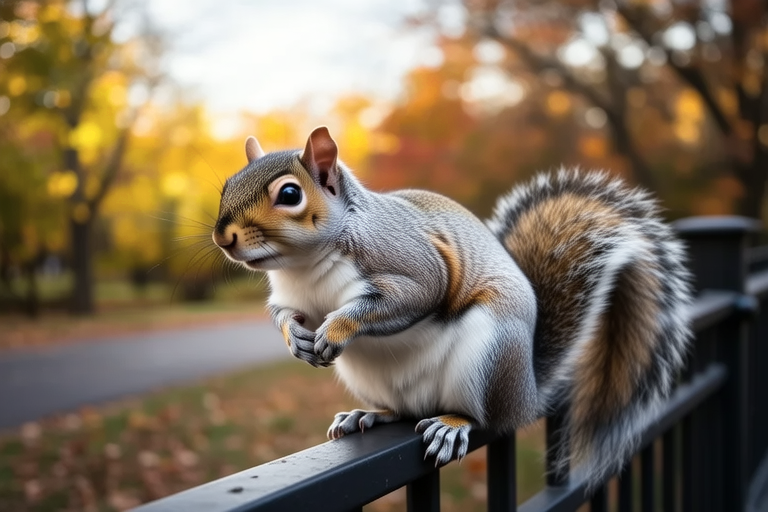
Urban Squirrels: Surviving in the Concrete Jungle
In the heart of bustling cities, where towering skyscrapers touch the sky and roads buzz with relentless traffic, a small but resilient creature thrives – the urban squirrel. These nimble rodents have adapted to the urban environment in remarkable ways, showcasing an array of behaviors that make them both fascinating and essential components of city life. From navigating through human-dominated landscapes to thriving on varied diets and forming unique relationships with people, urban squirrels present a captivating study of adaptation and survival.
Navigating Human-Dominated Landscapes
Urban squirrels, primarily eastern grey squirrels (Sciurus carolinensis) and fox squirrels (Sciurus niger), have mastered the art of living among humans. They’ve learned to exploit the vertical spaces provided by buildings, trees, and power lines, creating complex networks of pathways that allow them to move swiftly between food sources, nesting sites, and safety zones. Their agility and climbing prowess enable them to traverse rooftops, balconies, and even fire escapes, turning these structures into extensions of their natural habitat.
The ability to adapt to new environments is one of the key reasons why squirrels thrive in urban areas. In cities, squirrels must constantly adjust to changes in their surroundings, such as construction projects or the introduction of new green spaces. They’ve developed a keen sense of spatial awareness, allowing them to memorize routes and shortcuts efficiently. This skill is crucial for avoiding predators, accessing food, and finding shelter.
Diet Variations in Urban Settings
Urban squirrels face a different dietary landscape compared to their rural counterparts. While wild squirrels predominantly feed on nuts, seeds, and fruits from native plants, city-dwelling squirrels have expanded their menu to include a wide range of human-generated foods. They are opportunistic omnivores, meaning they will eat almost anything available, including birdseed, pet food, discarded snacks, and even compost.
This dietary flexibility has allowed squirrels to flourish in urban environments, where food sources can be unpredictable. However, it also exposes them to potential health risks. For instance, consuming large amounts of processed foods or foods high in salt and sugar can lead to obesity and other health issues. Despite these risks, squirrels have adapted by being selective about what they eat, often choosing healthier options when given the chance.
Interactions with Humans
Urban squirrels have a complex relationship with humans. Many people view them as cute and charming creatures, feeding them scraps and watching them scurry about. However, this interaction can sometimes lead to conflicts, especially when squirrels become too bold or aggressive. In some cases, squirrels may damage gardens, raid bird feeders, or even enter homes in search of food.
Despite these occasional nuisances, squirrels play a vital role in maintaining balance within urban ecosystems. By dispersing seeds and nuts, they help promote the growth of trees and plants, contributing to the greening of cities. Additionally, squirrels serve as prey for larger predators, such as hawks and owls, helping to control populations of these birds and maintain ecological stability.
Survival Strategies in Concrete Jungles
Surviving in a city requires more than just finding food; it involves evading dangers and ensuring safety. Urban squirrels have developed several strategies to cope with the challenges of city life. One of the most effective methods is their ability to blend into their surroundings. Their fur coloration, which can range from gray to red, helps them remain camouflaged against tree trunks, roofs, and other urban surfaces.
Another critical survival strategy is their social behavior. Squirrels are highly social animals, often living in groups or communities. This social structure allows them to share information about food sources, potential threats, and safe havens. They communicate through vocalizations, body language, and scent marking, creating a network of communication that enhances their chances of survival.
Unique Behaviors Observed
Observations of urban squirrels reveal some unique behaviors that set them apart from their rural relatives. For example, squirrels in cities have been seen using tools, such as sticks, to dig up buried nuts or reach hard-to-reach food items. This tool use demonstrates their intelligence and problem-solving abilities, further highlighting their adaptability to urban environments.
Additionally, urban squirrels exhibit a phenomenon known as “scatter hoarding,” where they bury multiple caches of food throughout their territory. This behavior ensures that they have a reliable supply of food during lean times, such as winter or periods of drought. Scatter hoarding also promotes seed dispersal, as some of the cached nuts may germinate and grow into new trees.
Scientific Insights on Their Impact on Urban Ecosystems
Research has shown that urban squirrels play a significant role in shaping urban ecosystems. As mentioned earlier, they contribute to the greening of cities by dispersing seeds and promoting plant growth. They also act as pollinators, inadvertently transferring pollen from one flower to another as they forage for food.
Moreover, squirrels serve as indicators of environmental quality. The presence of healthy squirrel populations can suggest that an area has sufficient resources to support wildlife. Conversely, declining squirrel numbers may indicate environmental stressors, such as pollution or habitat degradation. Monitoring squirrel populations can provide valuable insights into the overall health of urban ecosystems.
Potential Conservation Efforts
Given the importance of urban squirrels to city ecosystems, there is a growing need for conservation efforts aimed at protecting these animals. One approach is to create more green spaces within cities, providing squirrels with additional habitats and food sources. Urban planners can incorporate native trees and shrubs into city designs, enhancing biodiversity and supporting wildlife.
Another strategy is to promote public education about the value of urban squirrels and the importance of responsible feeding practices. Encouraging people to feed squirrels nutritious foods, rather than junk food, can improve their health and longevity. Additionally, educating the public about the risks associated with feeding wildlife can help prevent over-reliance on handouts and reduce conflicts between squirrels and humans.
Lastly, implementing policies that protect squirrels from harm, such as reducing pesticide use and regulating outdoor pets, can create safer environments for these animals. By taking these steps, we can ensure that urban squirrels continue to thrive and contribute positively to our cities.
Conclusion
Urban squirrels are true survivors, having adapted to the challenges of city life in remarkable ways. Their ability to navigate human-dominated landscapes, their diverse diets, and their unique behaviors all contribute to their success in urban environments. By understanding the role that squirrels play in urban ecosystems and taking steps to conserve them, we can create healthier, more vibrant cities for both humans and wildlife alike.
