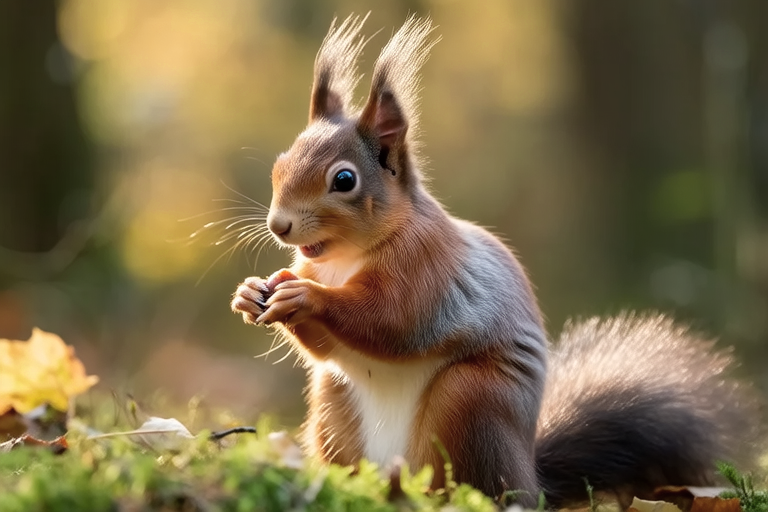
5 Surprising Facts About Squirrels That Will Make You Look at Them Differently
Squirrels are one of the most ubiquitous creatures in urban and suburban areas. They dart around parks, climb trees, and sometimes even raid bird feeders, making them a familiar sight for many. However, despite their common presence, there’s much more to these furry critters than meets the eye. Below are five surprising facts about squirrels that will make you appreciate them in a whole new light.
1. Squirrels Have Exceptional Memory Skills
Imagine being able to remember the location of thousands of hidden nuts scattered across a vast area. This isn’t just a figment of imagination; it’s a reality for squirrels. These small mammals possess an extraordinary memory, which allows them to find the food they’ve buried during times of abundance, such as autumn, when they need it most in winter. According to research, gray squirrels can recall the location of up to 9,000 hidden nuts within a year. This ability is comparable to humans memorizing the locations of thousands of books in a large library. Squirrels employ various techniques to remember where they’ve stashed their food, including spatial memory and associative learning. Their brain’s hippocampus, a region involved in memory formation, is particularly well-developed, giving them this remarkable skill. So next time you see a squirrel busily burying nuts, remember that it’s not just storing food but also exercising its exceptional memory.
2. Squirrels Can Communicate Through Body Language
Humans rely heavily on verbal communication, but squirrels have developed an intricate system of body language to convey messages. These gestures range from simple tail flicks to complex postures that can indicate everything from alarm to aggression. For instance, a flicking tail might signal to other squirrels that danger is nearby, while a raised tail could be a sign of dominance or readiness to defend territory. Squirrels also use vocalizations to communicate, but their body language plays a crucial role in conveying nuanced messages. Interestingly, different species of squirrels may have distinct ‘dialects,’ meaning their gestures can vary slightly based on geographic location or social group. This non-verbal communication system is akin to the hand signals used in sports or the subtle cues exchanged between dance partners. It’s a fascinating aspect of squirrel behavior that highlights their social complexity and adaptability.
3. Squirrels Are Natural Acrobats
If you’ve ever watched a squirrel leap from tree to tree, you know they’re incredibly agile. But did you know that they’re also accomplished acrobats? Squirrels can jump distances up to ten times their body length, making them some of the best leapers in the animal kingdom. Their powerful hind legs and flexible spines enable them to execute precise jumps, often landing on narrow branches with ease. In addition to jumping, squirrels are skilled climbers, using their sharp claws to grip bark and navigate vertical surfaces with grace. Their agility is not just for show; it’s essential for survival. By moving quickly and efficiently through trees, squirrels can avoid predators and reach food sources that might otherwise be inaccessible. Imagine if humans could jump ten times our height; that would certainly change how we interact with our environment. Squirrels’ acrobatic abilities showcase their incredible physical prowess and adaptability.
4. Squirrels Hibernate, Sort Of
Contrary to popular belief, not all squirrels hibernate. While some species, like the ground squirrel, enter a state of torpor where their body temperature drops and metabolism slows significantly, tree squirrels have a different approach. Instead of hibernating, they cache food throughout the fall and rely on stored fat reserves to survive during the coldest months. During periods of extreme cold, tree squirrels may become less active and stay in their dens for extended periods. However, they don’t experience the deep sleep associated with true hibernation. This strategy allows them to remain alert and responsive to changes in their environment, such as the availability of food or the presence of predators. The difference between hibernation and this caching strategy is akin to the difference between a long vacation and a weekend getaway. Both involve reduced activity, but the latter allows for quick resumption of normal life when necessary.
5. Squirrels Are Masters of Adaptation
In the face of urbanization and habitat loss, many animals struggle to adapt to human-altered environments. Squirrels, however, have proven to be remarkably adaptable. They have successfully colonized cities and towns, thriving in environments that would be inhospitable to many other species. One of the reasons for their success is their versatile diet. Squirrels are omnivores, meaning they eat both plant and animal matter. This dietary flexibility allows them to find food sources in urban areas, such as birdseed, fruits, and even human garbage. Additionally, squirrels are highly intelligent and resourceful, using tools like sticks to extract seeds from bird feeders. Their ability to adapt to new environments is similar to humans’ ability to thrive in diverse cultures and climates. By studying squirrels, researchers can gain insights into how animals cope with environmental changes, offering valuable lessons for conservation efforts.
Summary: The Unique World of Squirrels
Squirrels are more than just cute, fluffy creatures that scamper through parks and backyards. They possess exceptional memory skills, communicate through body language, are natural acrobats, and have adapted to urban environments with remarkable resilience. Each of these traits underscores the unique and fascinating nature of squirrels. Whether they’re remembering thousands of hidden nuts, using their bodies to convey messages, or leaping through trees with precision, squirrels continue to surprise and delight us. As we learn more about these animals, we can’t help but admire their intelligence and adaptability. Hopefully, this article has sparked your curiosity and encouraged you to look at squirrels with renewed appreciation. There’s always more to discover about the world around us, and squirrels offer a delightful entry point into the wonders of nature.
