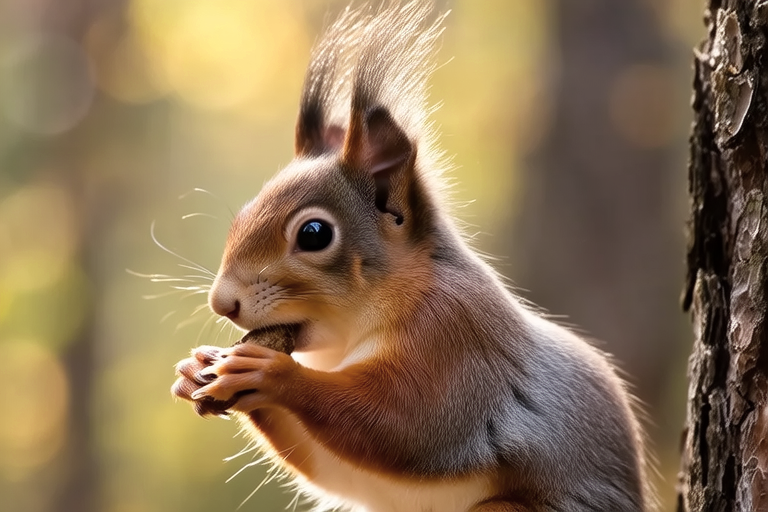
The Astonishing Life of Squirrels: Nut Hoarders and Backyard Acrobats
Squirrels, those ubiquitous creatures darting through parks and backyards, have long been admired for their playful antics and resourcefulness. Their ability to navigate complex environments with remarkable agility has made them a favorite subject of both casual observers and scientists alike. This article delves into the fascinating behaviors and adaptations of squirrels, focusing on their unique habits as nut hoarders and their agility as backyard acrobats. We will explore their role in ecosystems, their communication methods, the challenges they face in urban environments, and recent scientific findings about their intelligence and memory.
Nut Hoarding: A Key Survival Strategy
One of the most notable traits of squirrels is their skill in gathering and storing food. These small mammals are masterful at collecting nuts, seeds, and other edibles, which they bury in various locations throughout their territory. This behavior, known as caching, ensures that they have a reliable food supply during lean times, such as winter or periods of drought.
Research has shown that squirrels can remember the location of thousands of caches, even after months have passed. This incredible memory is due to their highly developed spatial awareness and problem-solving abilities. Scientists have observed that squirrels often pretend to cache a nut in one spot while secretly moving it to another, a strategy known as “deceptive caching.” This behavior helps protect their food stores from potential thieves, such as other squirrels or birds.
Anecdote: One summer afternoon, I watched a squirrel diligently bury a walnut in my backyard. It dug a hole with its paws, placed the nut inside, and covered it with dirt. To my surprise, the squirrel then pretended to cache another nut in a different spot before quickly retrieving the first one and hiding it elsewhere. Its clever deception left me in awe of its intelligence.
Agility and Acrobatics: The Perfect Backyard Acrobat
Squirrels are renowned for their agility and acrobatic skills, making them a joy to watch as they leap from branch to branch or scamper up and down trees. Their powerful hind legs, sharp claws, and flexible bodies allow them to move swiftly and gracefully through their arboreal habitats. Squirrels can also swim, although this is less common and usually occurs when they need to cross water to reach food or escape predators.
In addition to their impressive physical abilities, squirrels are highly adaptable creatures. They have learned to thrive in a variety of environments, from forests and woodlands to suburban and urban areas. In cities, squirrels have become adept at navigating sidewalks, climbing buildings, and accessing bird feeders. Their ability to survive in these diverse settings highlights their resilience and resourcefulness.
Anecdote: On a crisp autumn morning, I witnessed a squirrel leaping from tree to tree with remarkable precision. It effortlessly cleared gaps between branches and landed gracefully on each one. As it approached a particularly wide gap, I held my breath, expecting it to falter. Instead, the squirrel launched itself with surprising power, soaring through the air and landing safely on the next tree. Its acrobatics were a true marvel to behold.
Communication and Social Behavior
Despite their solitary nature, squirrels rely on various forms of communication to interact with one another. They use vocalizations, body language, and scent marking to convey information about food sources, potential threats, and mating opportunities. For example, when a predator is nearby, squirrels may emit high-pitched alarm calls to warn others in the area. These calls can vary in pitch and duration depending on the type of threat, allowing other squirrels to quickly assess the situation and take appropriate action.
Scent marking is another important aspect of squirrel communication. By rubbing their scent glands against objects in their territory, squirrels leave behind chemical signals that announce their presence and mark boundaries. This behavior helps reduce conflicts with other squirrels and ensures that they can maintain control over valuable resources, such as food caches and mates.
Anecdote: While observing a group of squirrels in a park, I noticed one squirrel repeatedly scratching its chin and rubbing it against tree trunks and branches. After some time, another squirrel approached, sniffed the marked areas, and seemed to acknowledge the message. It was fascinating to see how scent marking played a crucial role in their social interactions.
Role in Ecosystems
Squirrels play an essential role in maintaining the health and balance of ecosystems. As seed dispersers, they help promote the growth and regeneration of plants by burying seeds and inadvertently planting them in new locations. Many species of trees and shrubs rely on squirrels for seed dispersal, as they often forget where they have hidden certain caches. Over time, these forgotten seeds germinate and grow into new plants, contributing to the biodiversity of the ecosystem.
In addition to their role as seed dispersers, squirrels serve as prey for numerous predators, including birds of prey, foxes, and snakes. Their abundance and widespread distribution make them an important food source for many animals. By controlling populations of certain plant species and providing food for predators, squirrels help regulate the dynamics of their ecosystems.
Challenges in Urban Environments
While squirrels have adapted well to urban environments, they still face several challenges in these human-dominated landscapes. One of the main challenges is finding sufficient food sources. In cities, squirrels must compete with other wildlife and humans for limited resources, such as bird feeders and garbage. Additionally, they are exposed to hazards like traffic, pollution, and predation by domestic pets.
To overcome these challenges, squirrels have developed innovative strategies. For instance, they have learned to exploit human activities, such as raiding gardens for fruits and vegetables or stealing food from picnickers. Some squirrels have even learned to open jars and containers to access food inside. Their adaptability and resourcefulness are key factors in their success in urban environments.
Recent Scientific Findings on Squirrel Intelligence and Memory
Recent studies have shed new light on the intelligence and memory capabilities of squirrels. Researchers have found that squirrels can solve complex problems, such as opening locks or retrieving food from difficult-to-reach places. Their problem-solving abilities suggest that squirrels possess a level of cognitive flexibility similar to primates.
Furthermore, studies have shown that squirrels can recognize individual humans based on facial features and body language. This recognition allows them to differentiate between friendly and potentially threatening individuals, enabling them to approach humans more confidently when necessary.
Anecdote: During a visit to a local park, I noticed a squirrel approaching me with increasing confidence. At first, it kept a safe distance but gradually moved closer, eventually sitting just a few feet away. I realized that the squirrel had likely recognized me as a non-threatening presence, possibly due to previous positive encounters. Its familiarity with me highlighted the depth of its cognitive abilities.
Conclusion
The fascinating behaviors and adaptations of squirrels, from their nut-hoarding habits to their acrobatic prowess, make them captivating subjects of study. Their role in ecosystems, their communication methods, and their challenges in urban environments all contribute to our understanding of these remarkable creatures. Recent scientific findings further emphasize the intelligence and memory of squirrels, highlighting their cognitive abilities and social interactions. Whether you’re watching them scurry across your backyard or observing their antics in a city park, squirrels never fail to entertain and inspire admiration.
