The Ultimate Guide to Raising a Lively Bengal Cat in Your Home
Welcome to the world of Bengal cats! These magnificent creatures are known for their striking appearance, high energy levels, and unique personalities. If you’re considering adopting a Bengal cat or already have one at home, this guide will provide you with all the information you need to ensure your feline friend lives a happy and healthy life.
Understanding the Bengal Cat’s Unique Characteristics
Bengal cats are a hybrid breed that combines the wild charm of Asian leopards with the domesticated nature of house cats. They possess a sleek, muscular body and a distinctive spotted or marbled coat that makes them stand out from other breeds. Their intelligence, curiosity, and playful demeanor make them excellent companions for active households.
One of the most notable traits of Bengal cats is their love for water. Many Bengals enjoy playing in water bowls or even taking baths, which can be a fun activity for both you and your pet. As a Bengal owner, you might find yourself surprised by your cat’s willingness to splash around in the sink or bathtub. My Bengal, Luna, loves to sit by the kitchen sink and watch me wash dishes. She often tries to join in, dipping her paws into the water and making a mess!
Another important characteristic is their high level of energy. Bengal cats require plenty of physical and mental stimulation to stay happy and healthy. Providing them with toys, climbing structures, and interactive games will help keep them engaged throughout the day.
Essential Nutrition Tips Tailored for Bengal Cats
Proper nutrition is crucial for maintaining your Bengal cat’s health and vitality. These cats have specific dietary needs due to their energetic lifestyle and potential susceptibility to certain health conditions. It’s important to feed them a balanced diet rich in protein, fats, and essential vitamins and minerals.
High-quality commercial cat foods formulated specifically for Bengal cats are available in pet stores. These products are designed to meet the nutritional requirements of this breed. However, it’s always a good idea to consult with your veterinarian before making any changes to your cat’s diet. They can provide personalized advice based on your cat’s age, weight, and overall health.
In addition to commercial food, you can also offer your Bengal cat some occasional treats. Opt for healthy options like small pieces of cooked chicken or fish. Avoid giving them table scraps or human foods that could be harmful to their health. I once tried feeding my Bengal cat some chocolate as a treat, but after doing some research, I realized how dangerous it could be for her. Chocolate contains theobromine, which is toxic to cats. Always double-check before sharing any human food with your pet.
Exercise and Playtime Recommendations to Keep Them Lively
Bengal cats are incredibly active animals that require regular exercise to maintain their physical and mental well-being. Incorporating daily play sessions into your routine will help keep them entertained and prevent boredom-related behaviors such as scratching furniture or becoming overly vocal.
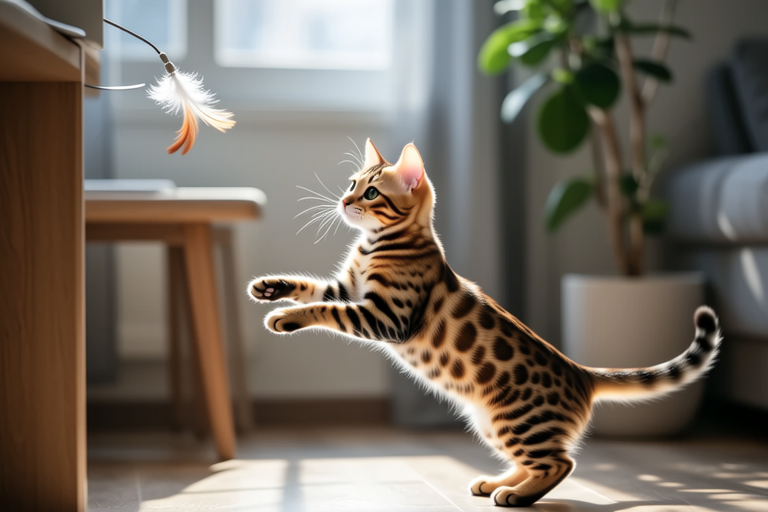
Toys that encourage hunting instincts, such as feather wands or laser pointers, are great choices for engaging your Bengal cat. Interactive puzzle feeders can also stimulate their minds while providing mental enrichment. Rotate toys frequently to keep things interesting and exciting for your cat.
Creating an indoor obstacle course using cardboard boxes, tunnels, and perches can provide hours of entertainment for your Bengal cat. Encourage climbing and jumping by setting up shelves or cat trees where they can explore and stretch their muscles. Outdoor enclosures, known as catio, allow Bengal cats to experience fresh air and natural surroundings safely. Ensure that any outdoor space has secure fencing and is free from potential hazards.
Grooming Needs Specific to Their Coat
Bengal cats have short, dense coats that require minimal grooming compared to long-haired breeds. However, regular brushing still plays an important role in maintaining their coat’s health and preventing matting. Use a soft-bristled brush or grooming glove to gently remove loose hairs and distribute natural oils across the skin.
Pay special attention to areas where mats may form, such as behind the ears or under the legs. Bathing your Bengal cat occasionally can help keep their coat shiny and clean. Some Bengals enjoy baths more than others, so introduce the process gradually if your cat is hesitant. Always use a mild, cat-safe shampoo and ensure thorough rinsing to avoid irritation.
Trimming nails regularly is another essential aspect of grooming. Long nails can cause discomfort during play or when interacting with family members. Use nail clippers designed for cats and be gentle when cutting the quick (the pink part inside the nail). If you’re unsure about proper technique, consider consulting a professional groomer or veterinarian for guidance.
Training Techniques
Training your Bengal cat can be an enjoyable way to bond with them while teaching basic commands and manners. Positive reinforcement methods, such as offering treats or praise, work best when working with these intelligent animals. Start by establishing clear boundaries early on regarding acceptable behaviors, such as scratching posts instead of furniture.
Teaching your Bengal cat simple tricks like “sit” or “come” can strengthen your relationship and provide mental stimulation. Clicker training is particularly effective for this purpose. By associating a click sound with a reward, you can shape desired behaviors over time. Remember to keep training sessions short (5-10 minutes) and positive to maintain your cat’s interest and enthusiasm.
Common Health Issues
Bengal cats generally enjoy good health; however, they may be prone to certain genetic predispositions depending on their lineage. Regular veterinary check-ups are vital for monitoring your cat’s overall wellness and addressing any concerns promptly.
Dental disease is one of the most common health problems affecting cats. Providing dental chews, brushing your cat’s teeth with a pet-specific toothpaste, and offering crunchy kibble can help maintain oral hygiene. Obesity is another concern among Bengal cats due to their tendency towards laziness when not properly stimulated physically.
Heart disease, especially hypertrophic cardiomyopathy (HCM), has been reported in some Bengal lines. HCM causes thickening of the heart muscle, potentially leading to serious complications. Genetic testing can identify carriers of this condition within breeding programs, helping reduce its prevalence in future generations.
Advice on Creating a Safe and Stimulating Home Environment
Providing a safe and stimulating environment for your Bengal cat is key to ensuring their happiness and well-being. Secure windowsills and balconies to prevent accidental falls. Install childproof latches on cabinets containing household chemicals or medications. Keep electrical cords out of reach to avoid chewing accidents.
Create designated spaces for sleeping, eating, and playing within your home. Offer comfortable resting spots elevated off the ground, such as window seats or cat towers. Provide hiding places where your cat can retreat when feeling overwhelmed or stressed.
Engage your Bengal cat’s senses by introducing new scents, textures, and sounds into their environment. Rotate toys periodically to keep things fresh and exciting. Consider incorporating interactive elements like mirrors or videos of birds or other animals to capture their attention.
In conclusion, raising a lively Bengal cat requires dedication, patience, and a commitment to providing them with the care they deserve. By understanding their unique characteristics, meeting their nutritional needs, encouraging regular exercise, maintaining proper grooming practices, implementing effective training techniques, being aware of common health issues, and creating a safe and stimulating home environment, you’ll be able to enjoy many years of companionship with your beloved Bengal.
