Fun Facts and Fascinating Behaviors of Red-Eared Sliders
The red-eared slider (Trachemys scripta elegans) is one of the most recognizable and widely distributed turtle species in the world. Known for their distinctive red markings behind each eye, these aquatic turtles have captured the hearts of many with their unique physical features, intriguing behaviors, and adaptability to various environments. This article delves into the fascinating world of red-eared sliders, exploring their physical characteristics, habitats, diets, and lifespans, as well as their captivating behaviors.
Physical Characteristics
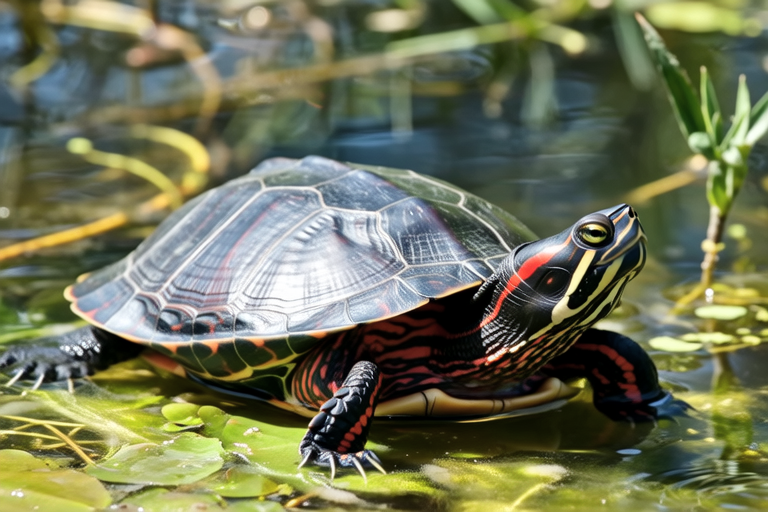
Red-eared sliders are medium-sized turtles, typically ranging from 10 to 30 centimeters in length, though some can grow up to 40 centimeters. Their carapace (upper shell) is usually olive-green or brown with yellow stripes, while their plastron (lower shell) is pale yellow. The most striking feature of these turtles is the red stripe behind each eye, which gives them their common name. This vibrant coloration serves as a warning to potential predators, signaling that they are toxic due to their consumption of poisonous plants.
Red-eared sliders possess strong limbs equipped with webbed feet, ideal for swimming and digging. Males have longer claws on their front legs, which they use during courtship displays. The males also tend to be smaller than females, with a more elongated tail. These physical attributes enable them to thrive in their aquatic environment and perform essential functions like foraging and reproduction.
Habitat and Distribution
Native to the southern United States and northern Mexico, red-eared sliders have been introduced to various parts of the world through the pet trade. They prefer slow-moving rivers, lakes, ponds, and marshes with abundant vegetation and basking sites. These turtles require areas where they can easily access both water and land, as they spend significant portions of their day basking in the sun to regulate their body temperature.
Red-eared sliders are highly adaptable and can survive in a range of climates, from temperate to tropical regions. However, their ability to thrive in different environments has led to concerns about their impact on native wildlife in areas where they have been introduced. In some cases, these invasive species outcompete local turtle populations for resources, posing a threat to biodiversity.
Diet and Feeding Habits
Red-eared sliders are omnivores, meaning they consume both plant matter and animal-based foods. As juveniles, they rely heavily on protein-rich prey such as insects, small fish, and snails. As they mature, their diet shifts towards a greater proportion of vegetation, including algae, duckweed, and other aquatic plants.
These turtles use their sharp beaks to tear apart food and swallow it whole. They are opportunistic feeders, taking advantage of whatever food sources are available in their environment. During feeding, red-eared sliders may engage in competitive behavior, particularly when food is scarce. This competition can lead to dominance hierarchies within groups, where larger or more aggressive individuals secure better access to resources.
Lifespan and Growth
Under optimal conditions, red-eared sliders can live for 20 to 40 years, with some individuals reaching even older ages. Factors such as genetics, environmental conditions, and diet play crucial roles in determining their longevity. Captive red-eared sliders often enjoy longer lifespans compared to their wild counterparts, as they are protected from predators and disease.
Growth rates vary depending on factors like temperature, food availability, and genetic predisposition. Juvenile red-eared sliders grow rapidly during their first few years, after which growth slows down. Females generally reach sexual maturity at around 6 to 8 years of age, while males mature slightly earlier, between 3 to 5 years.
Behavioral Traits
Hibernation
In colder climates, red-eared sliders undergo brumation, a process similar to hibernation but adapted for semi-aquatic animals. During brumation, these turtles become less active and reduce their metabolic rate to conserve energy. They seek shelter in the mud at the bottom of bodies of water or burrow into the banks, where they remain until temperatures rise again.
Before entering brumation, red-eared sliders increase their food intake to build up fat reserves. This stored energy sustains them throughout the winter months when food sources are scarce. Once warmer weather returns, they emerge from their shelters and resume normal activities.
Mating Rituals
The breeding season for red-eared sliders typically occurs between spring and early summer. Males initiate courtship by swimming around females, extending their forelegs and tapping or nipping at her head or neck. If the female is receptive, she will allow the male to mount her, leading to copulation. After mating, the female searches for suitable nesting sites, often traveling considerable distances from water bodies.
Nesting usually takes place in sandy or loamy soil near water sources, where the female digs a hole and lays between 2 to 30 eggs. Incubation lasts approximately 60 to 90 days, depending on temperature and humidity levels. Hatchlings emerge fully formed and independent, capable of swimming and feeding shortly after birth.
Social Interactions
Red-eared sliders are generally solitary creatures, except during mating seasons or when seeking communal basking spots. They exhibit territorial behavior, especially in confined spaces or when resources are limited. In these situations, dominant individuals may assert their authority through displays of aggression, such as biting or ramming others with their shells.
Despite their solitary nature, red-eared sliders can form social bonds within groups, particularly in captivity. When housed together, they learn to recognize each other’s presence and sometimes develop preferences for certain companions. This social aspect makes them popular pets among turtle enthusiasts who enjoy observing their interactions.
Conservation Status
While red-eared sliders are not currently endangered, their widespread distribution and adaptability have raised concerns about their impact on native ecosystems. Conservation efforts focus on preventing further introductions of non-native populations and protecting habitats that support both red-eared sliders and other wildlife.
Efforts to manage invasive populations include public awareness campaigns, regulations on the pet trade, and research into sustainable management practices. By promoting responsible ownership and encouraging proper disposal of unwanted pets, we can help mitigate the risks associated with the spread of red-eared sliders in non-native environments.
Conclusion
Red-eared sliders are fascinating creatures with unique physical characteristics, diverse behaviors, and complex social structures. Understanding their biology and ecology provides valuable insights into how they interact with their environment and each other. Whether observed in the wild or as beloved pets, these turtles continue to captivate people with their charm and resilience.
As we explore the world of red-eared sliders, let us remember the importance of responsible stewardship and conservation. By appreciating these remarkable animals and supporting efforts to protect their habitats, we contribute to maintaining the balance of our planet’s ecosystems for future generations.
