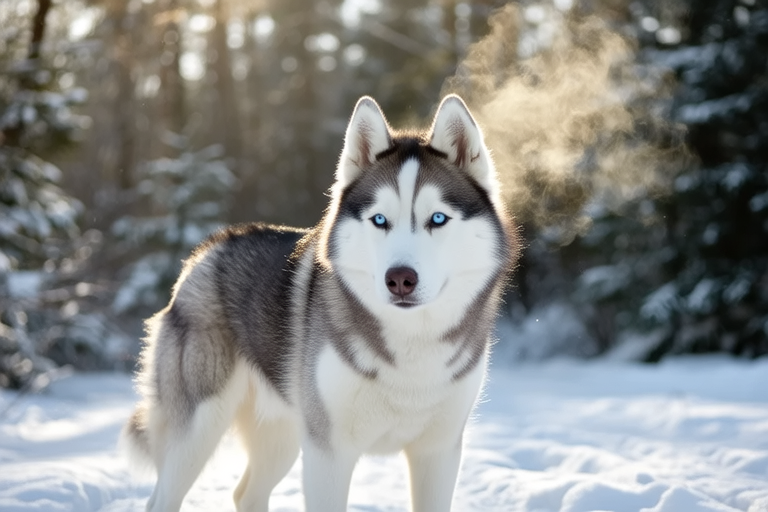
A Winter Wonderland Companion: Why Siberian Huskies Thrive in Cold Climates
Welcome to the enchanting world of Siberian Huskies, where these majestic creatures have adapted to thrive in some of the harshest and coldest environments on Earth. With their striking blue or multi-colored eyes, bushy tails, and a history deeply rooted in Siberia’s unforgiving landscapes, these dogs are more than just beautiful; they are marvels of evolution designed for survival in the coldest climates.
Adaptations for Extreme Cold
The Siberian Husky’s most prominent adaptation to cold weather is its thick double coat. The outer layer comprises long, coarse guard hairs that protect against snow and wind, while the inner layer is dense and soft, providing insulation. This coat not only keeps the dog warm but also repels water, making it ideal for snowy conditions. Additionally, their ears are smaller and more rounded compared to other breeds, reducing heat loss from the head.
Efficient thermoregulation is another key factor in their ability to withstand cold. Siberian Huskies have a lower metabolic rate than many other breeds, meaning they don’t burn through calories as quickly. This allows them to conserve energy and body heat for longer periods, crucial in environments where food sources can be scarce.
Historically, Siberian Huskies were bred by the Chukchi people of northeastern Asia for sledding and herding. These tasks required the dogs to work efficiently under harsh conditions, leading to further refinement of their cold-weather adaptations. Their ancestors had to endure long journeys across vast, frozen expanses, often pulling sleds laden with supplies. Over generations, the breed evolved to become highly efficient at conserving energy and maintaining body temperature.
Physical Adaptations
Siberian Huskies possess several physical features that help them cope with extreme cold. Their paws, for instance, are uniquely adapted for traversing icy terrain. They have thick, padded soles that provide traction on slippery surfaces and insulate against the cold. Webbed toes allow them to move swiftly through deep snow, spreading their weight and preventing them from sinking too deeply.
Another critical adaptation is their cardiovascular system. Unlike humans and many other animals, Siberian Huskies have the remarkable ability to maintain their core body temperature even when their extremities cool down. This is due to their circulatory system, which can shunt blood away from the skin surface and towards vital organs, ensuring that the heart, lungs, and brain stay warm. This adaptation prevents frostbite and hypothermia, allowing the dogs to remain active in freezing temperatures.
Energy Levels and Exercise Needs
Despite their resilience to cold, Siberian Huskies require regular exercise to stay healthy and happy. These dogs are known for their high energy levels and need plenty of physical activity to burn off excess energy. In colder climates, this can be particularly challenging, as the harsh weather might deter owners from taking their dogs out for walks or runs. However, it’s essential to ensure they get enough exercise to prevent behavioral issues such as excessive barking or destructive chewing.
Owners should aim to provide at least one hour of vigorous exercise daily, whether through leash walking, running, or participating in dog sports like agility training or flyball. Engaging in outdoor activities with your Siberian Husky can also strengthen your bond and provide mental stimulation. Consider enrolling in obedience classes or teaching them new tricks to keep their minds sharp during the long winter months.
Caring for Your Siberian Husky in Winter
For owners living in colder regions, there are several ways to ensure their Siberian Husky remains comfortable and healthy throughout the winter season. First and foremost, always check the weather forecast before taking your dog outside. While Siberian Huskies are well-adapted to cold, extremely low temperatures can still pose risks. Avoid exposing them to prolonged exposure to sub-zero temperatures or strong winds.
Invest in quality winter gear for your dog, such as insulated jackets or sweaters. These can provide additional warmth during walks or outdoor play sessions. Be mindful of their paws, which can be sensitive to ice and salt used for de-icing roads. After each outing, clean their paws thoroughly to remove any residue that could irritate their skin.
Keep their nails trimmed to prevent cracking and splitting, which can occur more frequently in cold weather. Regular grooming is also important, as it helps distribute natural oils throughout their coat and keeps it in top condition. Brush them regularly to remove loose hair and prevent matting, which can trap moisture and lead to discomfort.
Finally, pay attention to their diet. While Siberian Huskies have a relatively low metabolic rate, they still need sufficient nutrients to maintain their energy levels and overall health. Consult with your veterinarian about adjusting their diet to ensure they’re getting all the necessary vitamins and minerals. Providing fresh, clean water is also crucial, as dehydration can occur even in cold weather if they don’t drink enough.
Conclusion
In conclusion, Siberian Huskies are truly remarkable companions for those living in cold climates. Their unique adaptations, from their thick double coats to their efficient thermoregulation and cardiovascular systems, allow them to thrive in environments that would challenge many other breeds. By understanding and addressing their specific needs, you can ensure your Siberian Husky remains healthy, happy, and active throughout the winter months.
Remember, while these dogs are built for cold, they still require regular exercise, proper grooming, and attentive care. By following these tips, you can enjoy the company of your Siberian Husky and create lasting memories together in the wintery wonderland they were born to call home.
