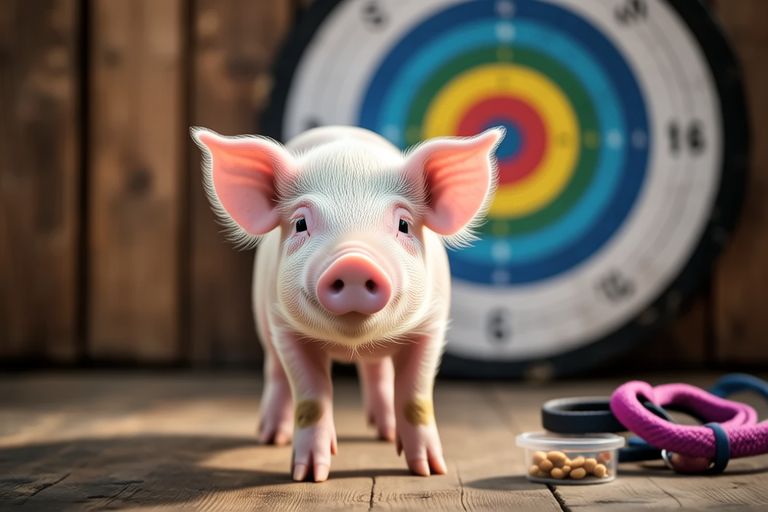
The Ultimate Guide to Training Your Tiny Tamer: Mini Pigs
Welcome to the ultimate guide to training your tiny tamer, also known as mini pigs! These intelligent, curious creatures can be delightful companions when properly trained. This comprehensive guide will cover everything from understanding their behavior to ensuring they get the right diet and exercise.
Understanding Mini Pig Behavior
Mini pigs, despite their small size, exhibit complex behaviors that are fascinating to observe and understand. They are highly social animals that thrive in groups but can also form strong bonds with humans. Recognizing these behaviors is key to effective training. For instance, pigs use their snouts to explore and manipulate objects, which can sometimes be mistaken for destructive behavior. Instead of punishing this natural instinct, redirect it into constructive activities like foraging or playing with toys designed for pigs.
Communication is another crucial aspect of pig behavior. Pigs communicate through body language, vocalizations, and even scent marking. Learning to read these signals can help you anticipate your pet’s needs and respond appropriately. For example, a pig might nuzzle you gently to request attention or food. Understanding these cues fosters a deeper connection between you and your pet.
Essential Tips for Initial Training
Starting off on the right foot with your mini pig is important. Begin by creating a safe and comfortable environment where your pig feels secure. Introduce them gradually to new people, places, and experiences to avoid overwhelming them. Patience is key; allow your pig time to adjust to each new situation.
Establishing a routine helps pigs feel more secure and predictable. Feed them at consistent times and create a schedule for playtime and rest periods. Consistency in routines and expectations sets the foundation for successful training.
Basic Commands Every Mini Pig Should Learn
Teaching basic commands to your mini pig not only enhances communication but also ensures safety. Commands such as ‘come,’ ‘sit,’ and ‘stay’ are fundamental. Start teaching these commands in a quiet, distraction-free area. Use treats as rewards to encourage correct responses.
For example, to teach ‘come,’ hold a treat in front of your pig and call its name followed by the command. When your pig comes towards you, give it the treat and praise. Repeat this process several times daily until your pig responds reliably. Gradually increase the difficulty by adding distractions or increasing the distance.
Methods for Positive Reinforcement
Positive reinforcement is an effective and ethical method of training that focuses on rewarding desired behaviors rather than punishing unwanted ones. This approach strengthens the bond between you and your pig while encouraging good behavior.
To implement positive reinforcement, always reward your pig immediately after it performs a desired action. This could be verbal praise, a favorite treat, or a toy. The timing is crucial; if there’s too much delay, your pig may not associate the reward with the action. Consistency is also vital; ensure everyone interacting with the pig uses the same rewards and commands.
Common Challenges Faced During Training and Their Solutions
Training mini pigs isn’t without its challenges. One common issue is dominance struggles. Pigs are naturally assertive and may test boundaries. To address this, establish yourself as the leader through consistent routines and gentle but firm guidance. Never resort to physical punishment, which can damage the trust between you and your pig.
Another challenge is housebreaking. Pigs can be taught to use a litter box or go outside, similar to cats or dogs. Consistency is key here; take your pig to the designated area regularly, especially after meals or naps. Reward successful trips with treats and praise. If accidents happen indoors, clean up thoroughly without scolding your pig, as this can lead to stress and anxiety.
