The Ultimate Guide to Choosing the Right Habitat for Your Tarantula
Understanding Tarantula Species Diversity and Their Specific Habitat Needs
Tarantulas come in a wide array of species, each with its own unique characteristics and habitat preferences. Some species thrive in dry, arid environments, while others prefer humid, tropical climates. Researching your chosen tarantula’s natural habitat is crucial for replicating it in captivity.
For instance, species like the Mexican Redknee Tarantula (Brachypelma smithi) are accustomed to semi-arid regions and require less moisture compared to tropical species such as the Curly Hair Tarantula (Brachypelma albopilosum). Understanding these differences helps in providing the right environment, ensuring your tarantula remains healthy and active.
Selecting Appropriate Enclosure Sizes
The size of the enclosure is one of the most critical aspects of tarantula care. A too-small enclosure can stress the tarantula, leading to health issues, while an excessively large one might cause difficulties in maintaining the correct environmental conditions.
As a general guideline, an enclosure should be at least three times the leg span of the tarantula in length and width, and at least twice the leg span in height. For example, if your tarantula has a leg span of 6 inches, an enclosure measuring 18 inches by 18 inches by 12 inches would be ideal.
Substrate Types
Choosing the right substrate is vital for creating a comfortable and healthy environment for your tarantula. Substrates should allow for burrowing and help maintain proper humidity levels.
Common substrate options include coconut fiber, peat moss, and bark chips. Coconut fiber is highly absorbent and retains moisture well, making it suitable for species that require higher humidity. Peat moss is also absorbent but tends to retain moisture longer, which can be beneficial for tropical species. Bark chips provide excellent drainage and are often used for species from drier habitats.
Temperature and Humidity Requirements
Maintaining the correct temperature and humidity levels is essential for the health of your tarantula. Different species have different requirements, so it’s important to research your specific tarantula’s needs.
Most tarantulas thrive in temperatures ranging from 75°F to 85°F (24°C to 29°C). Humidity levels vary widely; for example, desert species may require humidity levels between 30% and 50%, while tropical species might need humidity levels between 70% and 80%.
Ventilation Considerations
Proper ventilation ensures that the enclosure does not become stagnant, which can lead to respiratory problems for the tarantula. Ventilation also aids in maintaining consistent temperature and humidity levels.
Enclosures should have adequate ventilation without allowing drafts or excessive airflow. Screen tops or mesh covers work well, as they allow for air circulation while preventing escape. Avoid using tight-fitting lids that could trap moisture inside the enclosure.
Hiding Spots and Decor
Tarantulas are naturally shy creatures and appreciate having places to hide. Providing hiding spots not only makes the enclosure more visually appealing but also helps reduce stress for your tarantula.
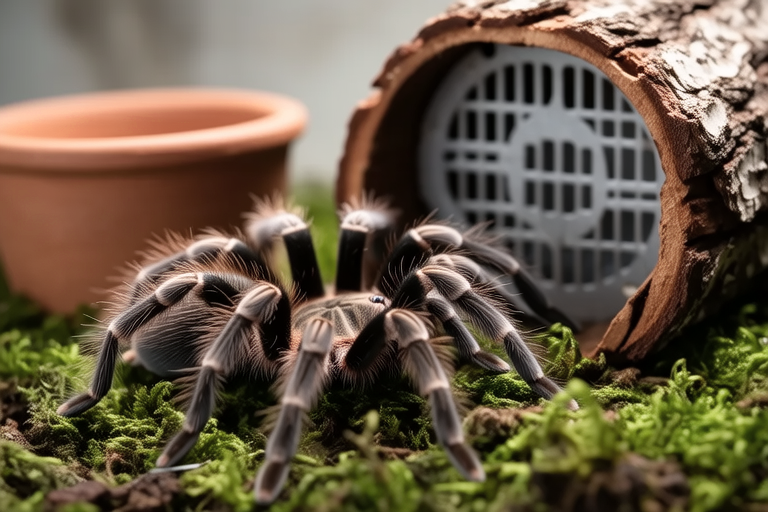
Use cork flats, half logs, or clay flower pots as hiding spots. These items are easy to clean and provide secure hiding areas. Additionally, adding live or artificial plants can enhance the enclosure’s aesthetic appeal and offer additional hiding spots.
Feeding and Safety Within the Habitat
Feeding your tarantula within its enclosure requires careful consideration to ensure safety and proper digestion. It’s advisable to feed outside the enclosure to prevent accidental injury or ingestion of substrate.
Place food items (such as crickets or mealworms) in the enclosure during feeding time, and remove any uneaten prey after 24 hours to prevent contamination. Ensure the enclosure is secure to prevent escapes during feeding.
Regular Maintenance Tips
Regular maintenance is key to keeping your tarantula’s habitat clean and safe. This includes cleaning the enclosure, checking for signs of illness, and monitoring environmental conditions.
Spot-clean the enclosure weekly by removing waste and replacing any damp or soiled substrate. Deep clean the enclosure every few months, disinfecting all surfaces and thoroughly drying before replacing the substrate. Regularly check the temperature and humidity levels, adjusting as necessary.
Common Mistakes to Avoid
Avoid common pitfalls that can negatively impact your tarantula’s health and well-being. One frequent mistake is overfeeding, which can lead to obesity and related health issues. Another common error is failing to provide adequate hiding spots, which can increase stress levels.
Ensure that the enclosure is escape-proof and secure to prevent accidents. Always handle your tarantula carefully to avoid stressing it or causing injuries.
Resources for Further Learning
For those eager to learn more about tarantula care, there are numerous resources available. Books such as ‘Tarantulas and Other Arachnids’ by Philippe de Vosjoli and ‘The Tarantula Keeper’s Guide’ by Stanley A. Schultz and Marguerite J. Schultz provide detailed information.
Online forums and communities, such as the American Tarantula Society and the International Tarantula Society, offer valuable insights and support from experienced keepers. Watching instructional videos on YouTube can also be beneficial, providing visual demonstrations of proper care techniques.
