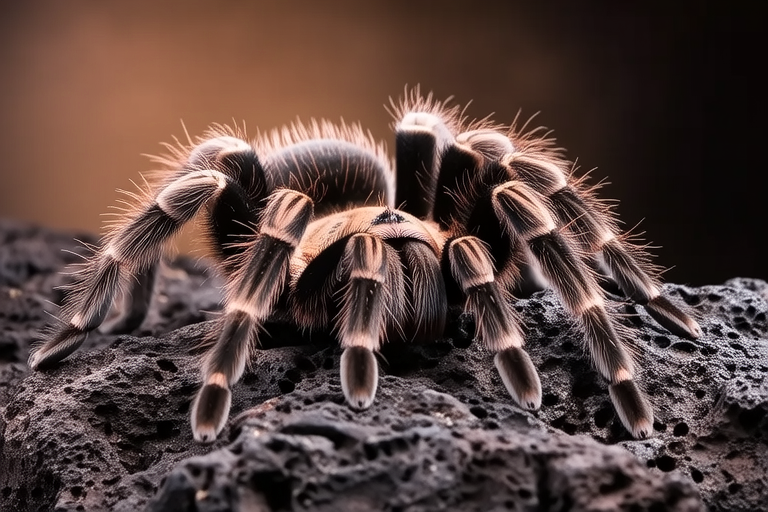
Top 10 Surprising Facts About Tarantula Behavior
Fact 1: Masters of Stealth Hunting
Tarantulas are exceptional hunters, employing a variety of stealthy tactics to catch their prey. Unlike many spiders that rely on webs, tarantulas primarily use their powerful legs and venomous fangs to ambush unsuspecting insects, small vertebrates, and even other arachnids. Their ability to remain motionless for extended periods allows them to patiently wait for the perfect moment to strike. Research conducted by Dr. William Eberhard at the Smithsonian Tropical Research Institute has shown that tarantulas can detect vibrations through their legs, enabling them to pinpoint the exact location of their prey without needing to see it. This unique sensory capability makes tarantulas formidable predators in their habitats.
Fact 2: Unique Defense Mechanisms
When threatened, tarantulas have developed several ingenious defense mechanisms. One of the most fascinating is their ability to release urticating hairs from their abdomen. These tiny, barbed hairs can cause irritation and discomfort if they come into contact with an attacker’s skin or eyes. Studies by entomologist Herbert W. Levi have demonstrated that these hairs are effective deterrents against predators like birds and mammals. Additionally, some species of tarantulas adopt a defensive posture by raising their front legs and displaying their fangs, which can be intimidating enough to ward off potential threats. Some species, like the Mexican red-knee tarantula, may also play dead as a last resort when faced with danger.
Fact 3: Camouflage Experts
Tarantulas are masterful at blending into their surroundings, thanks to their coloration and behavior. Many species have evolved to resemble rocks or tree bark, making them nearly invisible to both prey and predators. For instance, the pink toe tarantula has a pinkish hue that helps it blend into the sandy environment of its native habitat in South America. This camouflage is crucial for survival, as it allows tarantulas to avoid detection while hunting and protects them from becoming prey themselves. A study published in the Journal of Arachnology highlights how the physical adaptations of tarantulas contribute significantly to their survival in diverse ecosystems.
Fact 4: Varied Feeding Habits
The feeding habits of tarantulas vary widely depending on their species and habitat. While most tarantulas are carnivorous, consuming insects and other small animals, some species have been observed engaging in cannibalism, particularly during mating season. Female tarantulas are known to eat males after copulation, although this behavior is more common in captivity than in the wild. Moreover, certain tarantulas exhibit unusual dietary preferences, such as the Goliath birdeater, which can consume small rodents and even bats. This flexibility in diet underscores the adaptability of tarantulas and their role in maintaining ecological balance within their ecosystems.
Fact 5: Social Behaviors Among Tarantulas
Contrary to popular belief, tarantulas are not entirely solitary creatures. Some species, like the Brazilian salmon pink tarantula, exhibit surprisingly social behaviors. In captivity, these tarantulas have been observed sharing burrows and even participating in communal hunts. Although interactions between tarantulas can sometimes lead to aggressive encounters, especially during mating season, these instances are relatively rare. Scientists believe that these social tendencies might serve to enhance the survival chances of tarantulas by providing additional protection against predators and ensuring better access to resources. Further research is needed to fully understand the extent and significance of these social behaviors in the wild.
Fact 6: Sensory Adaptations
Tarantulas possess an array of sensory adaptations that enable them to thrive in various environments. In addition to their vibration-detecting abilities, tarantulas can also sense changes in air pressure and temperature, which helps them anticipate the movements of prey or approaching threats. Their eyesight, though limited compared to other animals, is sufficient for detecting movement and recognizing shapes. However, their primary sensory organs are located in their legs, where specialized hairs allow them to perceive touch, chemical signals, and even the presence of water vapor. These sensory adaptations make tarantulas highly efficient in their natural habitats, contributing to their success as predators.
Fact 7: Longevity and Growth
Tarantulas are among the longest-lived arachnids, with some species living up to 30 years in captivity. This longevity is attributed to their slow growth rate and low metabolic demands. Tarantulas molt throughout their lives, shedding their exoskeleton to accommodate growth. Each molt can take several days, during which the tarantula remains vulnerable. The molting process is critical for their health and survival, as it allows them to repair damaged body parts and regenerate lost limbs. Understanding the molting cycle and its impact on tarantula health is essential for their care in captivity and for studying their life cycles in the wild.
Fact 8: Mating Rituals
Tarantula mating rituals are complex and often involve elaborate displays of courtship. Male tarantulas typically approach females cautiously, using vibrations to communicate their intentions. If the female accepts the male’s advances, she will allow him to mate. However, as mentioned earlier, mating can be risky for males, as they face the possibility of being consumed by the female afterward. Despite this danger, the reproductive strategies of tarantulas have evolved to maximize genetic diversity and ensure the survival of future generations. Researchers continue to explore the intricacies of tarantula mating behaviors, aiming to uncover more about the evolutionary pressures that shape these rituals.
Fact 9: Habitat Diversity
Tarantulas inhabit a wide range of environments, from deserts and grasslands to rainforests and caves. This versatility is due to their ability to adapt to different conditions and their flexible diets. Some species, like the desert hairy tarantula, are well-suited to arid environments, while others, such as the Chilean rose tarantula, thrive in humid, tropical settings. Tarantulas modify their surroundings to create shelters that protect them from predators and harsh weather. By burrowing into the ground or building silk-lined retreats, tarantulas can maintain a stable microclimate that supports their physiological needs. Understanding the relationship between tarantulas and their habitats is vital for conservation efforts aimed at preserving biodiversity.
Fact 10: Importance of Conservation
Understanding tarantula behavior is crucial for their conservation. As human activities encroach upon natural habitats, many tarantula species face threats to their survival. By studying tarantulas, researchers can identify key areas for conservation and develop strategies to mitigate the impacts of environmental changes. Furthermore, the preservation of tarantula populations contributes to the overall health of ecosystems, as these spiders play a vital role in controlling insect populations. Increased awareness and appreciation for tarantulas can foster greater support for conservation initiatives, ensuring the continued existence of these fascinating creatures for future generations.
