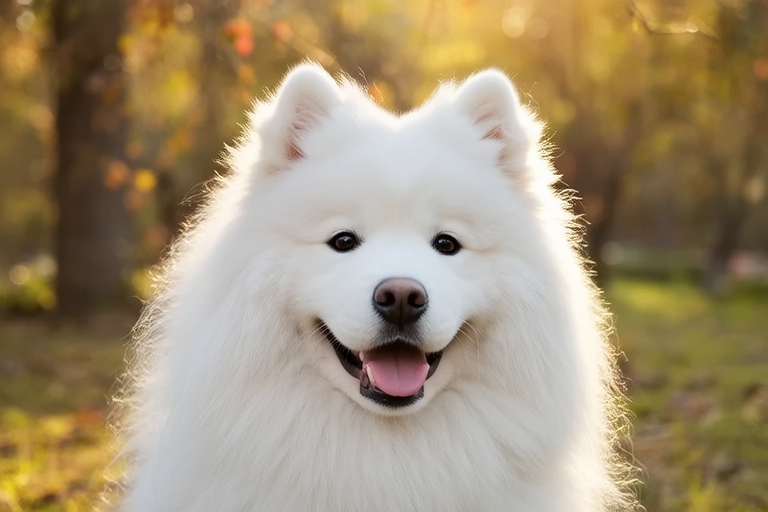
Samoyed Smiles: Unveiling the Joy These White Giants Bring
The Samoyed is a breed of dog that has captured the hearts of many with its striking appearance and endearing personality. Known for their thick, pure white coat and their signature “Sammy smile,” these dogs have become beloved family pets. Their origins trace back to Siberia, where they were bred for their exceptional ability to work and provide companionship in harsh, cold environments.
A Look at the Samoyed Breed
Samoyeds are medium to large-sized dogs with a robust build and a thick, double-layered coat that insulates them against the biting cold of their native lands. The outer layer consists of long, straight fur, while the undercoat is dense and soft, providing additional warmth. This coat comes in various shades of white, biscuit, and cream, though the pure white variety is most common and highly sought after. Their ears are triangular and alert, set high on their heads, and their tails curl over their backs, adding to their regal appearance. One of the most distinctive features of the Samoyed is their face, which often sports a broad, happy grin that seems to radiate warmth and friendliness.
The History of the Samoyed
Samoyeds were originally bred by the nomadic Samoyede people of Siberia. These indigenous people relied heavily on the dogs for survival, using them for herding reindeer, pulling sleds, and providing warmth by sleeping in close proximity to their human companions. Over time, the Samoyed became more than just working dogs; they also became cherished companions, known for their loyalty and affection. The breed was introduced to Europe and North America in the late 19th and early 20th centuries, where it quickly gained popularity as a show dog and family pet.
Temperament: Loyalty and Playfulness
Samoyeds are renowned for their loyal and playful nature, making them excellent family pets. They are generally friendly towards strangers and other animals, though proper socialization from a young age is essential to ensure they grow up to be well-adjusted and confident adults. Their loyalty extends beyond simple companionship; Samoyeds form strong bonds with their families, often following their owners around the house and seeking out opportunities to be near them. This devotion, combined with their playful demeanor, makes them ideal companions for children and other pets.
One of the most endearing qualities of the Samoyed is their seemingly perpetual smile. This expression, which is a result of the structure of their facial muscles, contributes to their reputation as the “smiling” breed. It is important to note, however, that this smile does not always indicate happiness. While Samoyeds are generally cheerful, they can also express discomfort or anxiety through their facial expressions. As such, it is crucial for owners to understand their dogs’ body language and vocalizations to better interpret their emotional state.
Care Requirements and Health Considerations
Maintaining a Samoyed’s coat requires regular grooming, especially during shedding seasons when the undercoat is released in large quantities. Brushing several times a week helps to remove loose hair and prevent matting. Additionally, bathing should be done sparingly, as frequent washing can strip the coat of its natural oils. Regular exercise is also vital for keeping Samoyeds healthy and happy. These dogs have a lot of energy and thrive in active households where they can engage in activities like running, hiking, and playing fetch.
While generally healthy, Samoyeds are prone to certain genetic conditions that potential owners should be aware of. Hip dysplasia, a condition affecting the hip joint, is one of the most common issues. Other health concerns include progressive retinal atrophy (PRA), which can lead to blindness, and diabetes. Regular veterinary check-ups and a balanced diet can help mitigate the risk of these conditions. Early detection and intervention are key to managing any health issues effectively.
Tips for Potential Owners
For those considering adding a Samoyed to their family, there are several factors to keep in mind. First and foremost, these dogs require a significant amount of attention and exercise. They are not suited for homes where they will be left alone for long periods. Secondly, training is essential to ensure that your Samoyed grows up to be a well-behaved adult. Positive reinforcement techniques, such as treats and praise, work best with this breed. Lastly, it is important to remember that while Samoyeds are generally friendly, they can be protective of their families, so socialization is crucial to prevent unwanted aggression.
Stories of Samoyed Joy
One story that exemplifies the joy Samoyeds bring to their families involves a family in New England who adopted a Samoyed named Snowball. Despite the challenges of living in a colder climate, Snowball quickly adapted to life with his new family. His cheerful disposition and loyalty made him a favorite among his human companions, and he became known for his playful antics and loving nature. Another example is a family in California who rescued a Samoyed mix named Blizzard. Initially shy and uncertain, Blizzard transformed into a confident and loving companion after finding his forever home. His unwavering loyalty and playful spirit brought immense joy to his family, proving that love and care can turn even the most timid of souls into a source of happiness.
In conclusion, Samoyeds are much more than just beautiful dogs with a winning smile. They are loyal, playful, and affectionate companions that bring joy and warmth to the lives of those fortunate enough to share their homes with them. Whether they are providing comfort, laughter, or simply being a loving presence, Samoyeds truly live up to their reputation as the “smiling” breed. For anyone looking for a devoted and joyful family pet, the Samoyed is an excellent choice. With proper care, training, and love, these white giants can become cherished members of any household, bringing endless smiles and happiness to all.
