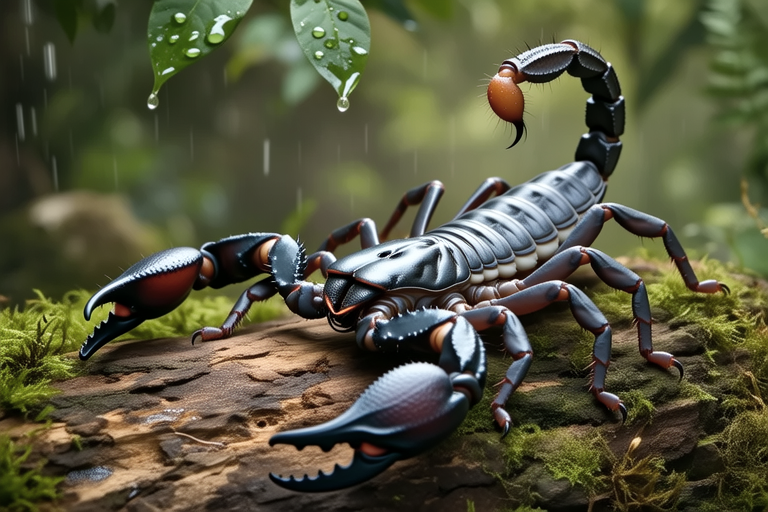
Heterometrus spinifer: The Enigmatic Jungle Spider
The Heterometrus spinifer, also known as the Spiny Forest Scorpion, is an intriguing creature that thrives in the dense jungles of Southeast Asia. This species, belonging to the family Scorpionidae, has garnered attention due to its distinct physical characteristics, dietary habits, and unique behaviors. Let’s delve into the world of this fascinating arachnid.
Physical Characteristics
The Heterometrus spinifer is a medium-sized scorpion, typically measuring between 8 to 13 centimeters in length. Its most striking feature is the presence of prominent spines along its tail, which serve both defensive and predatory purposes. These spines are not only visually intimidating but also provide additional protection against potential threats. The body coloration of H. spinifer ranges from dark brown to black, allowing it to blend seamlessly with the forest floor. Its pincers are robust and powerful, enabling it to grasp prey securely while delivering venomous stings when necessary.
Habitat Within Jungles
Heterometrus spinifer inhabits the lush, humid environments of tropical rainforests across Southeast Asia, including countries like Thailand, Malaysia, and Indonesia. It prefers areas with plenty of leaf litter, rock crevices, and tree hollows, where it can hide during daylight hours and emerge at night to hunt. The dense undergrowth provides ample cover, making it easier for these nocturnal predators to avoid detection by larger animals. Additionally, the high humidity levels in these jungles contribute to maintaining the moisture needed for their survival.
Dietary Habits
As carnivorous creatures, Heterometrus spinifer feeds primarily on insects such as crickets, beetles, and cockroaches. However, they are opportunistic feeders and will consume almost any small invertebrate that crosses their path. Their diet plays a crucial role in controlling insect populations within their ecosystem. By preying upon these organisms, H. spinifer helps maintain balance among different species, preventing overpopulation and ensuring ecological stability.
Unique Behaviors
One of the most remarkable aspects of Heterometrus spinifer is its ability to adapt to various environmental conditions. During periods of extreme heat or drought, these scorpions have been observed seeking refuge underground or beneath rocks to conserve energy. They are also known for their impressive climbing abilities; unlike many other scorpions, H. spinifer can scale vertical surfaces with ease. This trait allows them access to food sources that might otherwise be out of reach.
Role in the Ecosystem
In addition to regulating insect populations, Heterometrus spinifer contributes significantly to nutrient cycling within its habitat. As they consume organic matter and excrete waste products, they help break down dead plant material and release nutrients back into the soil. This process enriches the surrounding environment, fostering healthy plant growth and supporting biodiversity.
Myths and Misconceptions
Despite being relatively harmless to humans (their venom is generally considered mild), there exist numerous myths and misconceptions regarding Heterometrus spinifer. One common belief is that all scorpions are highly venomous and dangerous; however, this could not be further from the truth. In reality, only a small percentage of scorpion species pose significant risks to human health. Another misconception involves the idea that scorpions glow under ultraviolet light because they contain fluorescent compounds; while some species do exhibit this characteristic, it does not apply universally across all genera.
Recent Scientific Findings
Recent studies have shed new light on the biology of Heterometrus spinifer, revealing interesting insights into its behavior and physiology. Researchers have discovered that these scorpions possess highly sensitive sensory organs located near their claws, which allow them to detect vibrations caused by moving prey even through thick vegetation. Furthermore, genetic analyses suggest that H. spinifer may possess unique adaptations related to venom production, potentially offering valuable resources for medical research.
Comparison with Other Similar Species
When compared to closely related species such as Heterometrus laoticus and Heterometrus longimanus, Heterometrus spinifer stands out due to its distinctive physical features and behavioral traits. While both H. laoticus and H. longimanus share similarities in terms of habitat preference and diet, H. spinifer’s pronounced spines set it apart visually. Additionally, whereas H. laoticus tends to prefer drier habitats, H. spinifer thrives in the moist conditions typical of tropical rainforests.
Conservation Status and Efforts
Unfortunately, like many wildlife species, Heterometrus spinifer faces threats from deforestation, habitat destruction, and climate change. To address these challenges, conservationists are working tirelessly to protect critical habitats and promote sustainable land-use practices. Organizations such as the Wildlife Conservation Society and World Wildlife Fund are actively involved in preserving ecosystems essential for the survival of H. spinifer and countless other organisms. By raising awareness about the importance of protecting biodiversity, we can ensure that future generations continue to benefit from the wonders of nature.
