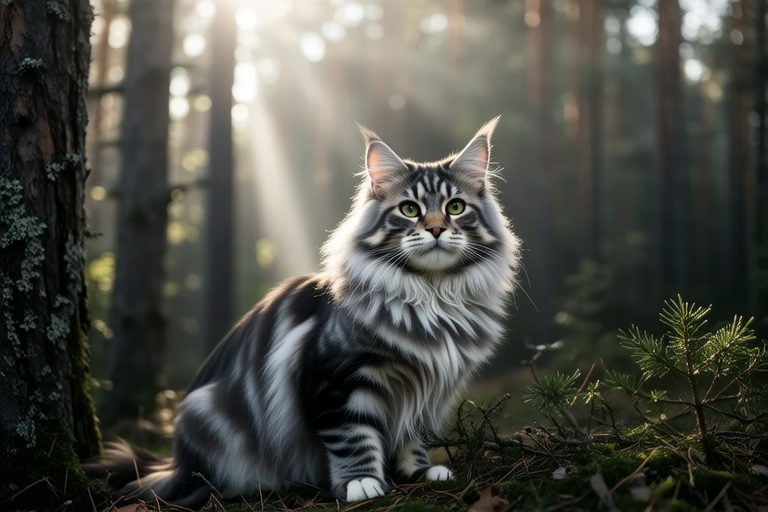
The Norwegian Forest Cat: A Journey Through History, Myth, and Modernity
The Norwegian Forest Cat is a breed steeped in history, mythology, and cultural significance. This majestic feline has captivated the hearts of cat enthusiasts for centuries, with its striking appearance, gentle nature, and strong connection to Norse legends. In this comprehensive guide, we will explore the unique history, origin, and cultural significance of the Norwegian Forest Cat, delve into its physical characteristics, temperament, and adaptability, and provide valuable insights for potential owners.
A Rich History and Mythical Origin
The Norwegian Forest Cat, often referred to as the “Wegie,” has been part of Scandinavian folklore for millennia. According to Norse legends, these cats were companions to the gods, particularly Freyja, the goddess of love, fertility, and war. In one myth, Freyja travels across the skies in her chariot, pulled by two large, powerful cats. The cats are said to be Norwegian Forest Cats, symbolizing strength, loyalty, and grace. This association with divine beings underscores the breed’s revered status in Norse culture.
The breed’s origins can be traced back to the Viking Age, where they were valued for their hunting prowess and ability to keep ships free from vermin. These cats accompanied Vikings on their voyages, ensuring a safe and comfortable journey. Over time, the Norwegian Forest Cat adapted to the harsh Scandinavian climate, developing a thick, water-resistant coat that kept them warm and dry during long winters. Their sturdy build and sharp instincts made them ideal companions for life on the sea and in the wild.
Physical Characteristics
The Norwegian Forest Cat is a large, muscular breed with a robust and well-balanced physique. Males typically weigh between 9 to 16 pounds, while females range from 7 to 12 pounds. Their dense, semi-longhair coat is one of their most distinguishing features, providing excellent insulation against cold weather. The coat consists of a soft, fluffy undercoat and a longer, water-resistant topcoat, which can grow even longer during winter months.
Their head is triangular-shaped, with a straight profile and a slight rise towards the forehead. They have large, almond-shaped eyes that can be green, gold, or copper, depending on their coat color. Norwegian Forest Cats also boast impressive tufted ears, which are covered with long hairs that protect their sensitive inner ear structures from the elements. Their paws are heavily furred, acting as natural snowshoes, allowing them to move gracefully through snow without sinking.
Temperament and Adaptability
Despite their wild and rugged appearance, Norwegian Forest Cats are known for their gentle, affectionate nature. They form strong bonds with their human families and enjoy spending quality time with them. While they may seem independent at times, they thrive on attention and companionship. These cats are intelligent and curious, often engaging in playful activities with their owners. They are patient and adaptable, making them suitable for various living environments, from bustling city apartments to spacious rural homes.
Norwegian Forest Cats are highly adaptable to different environments, thanks to their resilient nature. They can tolerate both hot and cold temperatures, but they prefer cooler climates due to their thick coats. They are excellent climbers and jumpers, often seeking high vantage points to observe their surroundings. Providing them with plenty of vertical space, such as cat trees and shelves, can help satisfy their natural instincts and prevent boredom.
