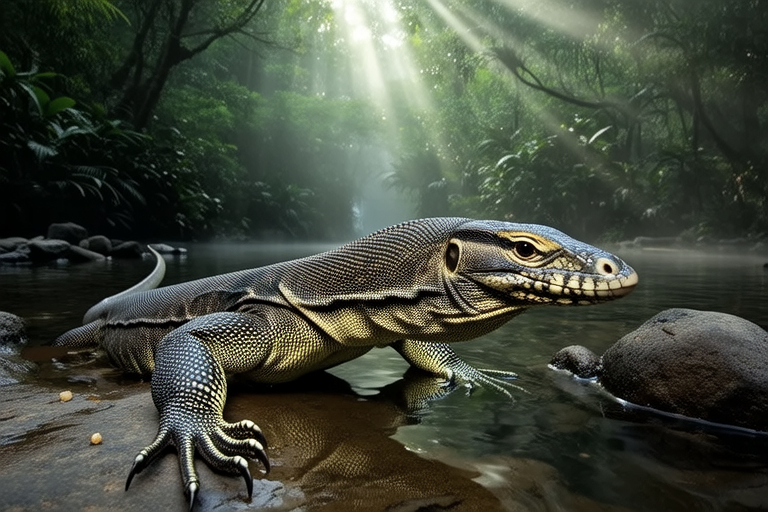
Water Monitors: The Underrated Aquatic Giants of the Reptile Kingdom
When it comes to reptiles, the spotlight often shines on charismatic species like crocodiles, snakes, and turtles. However, there exists a lesser-known giant that deserves recognition: the water monitor (Varanus salvator). This impressive creature, with its remarkable swimming prowess, sharp intelligence, and varied diet, is an aquatic marvel that has captivated researchers and enthusiasts alike. Despite its significant contributions to the ecosystem and its fascinating biology, the water monitor remains relatively unknown outside of its native habitats.
Unique Characteristics
The water monitor is one of the largest lizards in the world, with males reaching lengths of up to 3 meters (9.8 feet) and weighing around 20 kilograms (44 pounds). Their muscular bodies are well-suited for both terrestrial and aquatic environments, making them adept swimmers and climbers. These lizards have powerful tails that act as efficient rudders while swimming and serve as effective weapons during self-defense. Their scales are tough and keeled, providing excellent protection against predators.
Water monitors possess keen senses, including exceptional eyesight and hearing, which help them detect prey both above and below the water’s surface. They also have a highly developed sense of smell, which aids in tracking down food and navigating through their complex environments. Their intelligence is another distinguishing feature; studies suggest that water monitors can solve simple puzzles and exhibit problem-solving behaviors, further underscoring their cognitive capabilities.
Habitat
Native to Southeast Asia, from India to Indonesia, water monitors thrive in a variety of habitats, including mangrove forests, rivers, lakes, and coastal areas. They prefer regions with high humidity and abundant vegetation, where they can find ample hiding spots and hunting grounds. These adaptable reptiles are equally at home in freshwater and saltwater environments, allowing them to exploit diverse ecological niches.
Within their habitats, water monitors play crucial roles as top predators, controlling populations of smaller animals such as fish, amphibians, birds, and small mammals. By maintaining balance within ecosystems, they contribute significantly to biodiversity conservation efforts.
Diet
Water monitors are opportunistic feeders with a diverse diet that includes insects, crabs, snails, frogs, fish, eggs, and even carrion. Their ability to consume a wide range of foods enables them to survive in various conditions and adapt to changing environmental pressures. Additionally, they sometimes prey on smaller reptiles and mammals, showcasing their predatory versatility.
These lizards use their strong jaws and sharp teeth to tear apart their prey, demonstrating formidable hunting skills. Their dietary flexibility contributes to their success as apex predators within many ecosystems.
Behavior
Water monitors are social creatures that often live in groups, especially when resources are plentiful. They communicate through body language, vocalizations, and scent marking. Males compete for mates during breeding season, engaging in aggressive displays and physical confrontations. Females lay clutches of 10-60 eggs in burrows near water sources, where they incubate for approximately six months before hatching.
Despite their imposing appearance, water monitors display surprising gentleness towards humans who do not pose a threat. In some regions, locals interact closely with these animals, feeding them scraps or even keeping them as pets. This coexistence highlights the potential for harmonious relationships between people and wildlife.
Conservation Status
Unfortunately, due to habitat destruction, illegal pet trade, and overhunting for meat and traditional medicine, water monitors face significant threats to their survival. The IUCN Red List categorizes Varanus salvator as “Near Threatened,” indicating that without intervention, this species could become endangered in the future.
Efforts to protect water monitors include establishing protected areas, promoting sustainable land-use practices, and raising awareness among local communities about the importance of conserving these magnificent creatures. Conservationists work tirelessly to ensure that future generations will continue to marvel at the water monitor’s splendor.
Common Misconceptions
One prevalent myth surrounding water monitors is that they are dangerous to humans. While capable of delivering painful bites if provoked, most encounters end peacefully when left alone. Another misconception involves their intelligence; many underestimate just how smart these reptiles truly are. Studies have shown that water monitors can learn from experience and apply knowledge gained in new situations, challenging preconceived notions about animal cognition.
Furthermore, some believe that all large lizards belong to the same family, leading to confusion between different species. It is essential to recognize the distinct characteristics and behaviors of each type of lizard to foster accurate understanding and appreciation.
Why They Are Considered Underrated
Despite their impressive size and unique adaptations, water monitors receive far less attention than other reptilian giants like Komodo dragons or anacondas. Part of this underappreciation stems from limited exposure outside their native ranges, as well as a lack of media representation compared to more popular reptiles.
Another factor contributing to their relative obscurity lies in public perception. Many associate reptiles primarily with desert environments, failing to realize the diversity present in tropical regions. Educating audiences about the wonders of Southeast Asian ecosystems helps dispel misconceptions and encourages greater interest in lesser-known species.
Tips for Observing Water Monitors in the Wild
If you’re fortunate enough to visit areas inhabited by water monitors, here are some guidelines for responsible observation:
- Respect personal space: Keep a safe distance to avoid stressing the animal or putting yourself at risk.
- Observe quietly: Loud noises may startle water monitors and disrupt their natural behavior.
- Use binoculars or telephoto lenses: Getting too close might cause disturbance.
- Support conservation: Visit eco-friendly tour operators that prioritize ethical wildlife viewing practices.
Additionally, consider joining guided tours led by knowledgeable guides familiar with local wildlife regulations. They can provide valuable insights into water monitor ecology and offer safe opportunities for interaction.
Learning More About Water Monitors
To deepen your understanding of these incredible reptiles, explore resources available online or at libraries near you. Websites dedicated to herpetology often feature articles written by experts in the field, offering detailed information about water monitor biology, behavior, and conservation efforts.
For hands-on experience, volunteer with organizations involved in water monitor research projects. Participating in fieldwork provides firsthand knowledge of challenges faced by these animals while contributing positively toward their preservation.
Conclusion
Water monitors represent a fascinating chapter in the story of Earth’s biodiversity. Their remarkable size, swimming abilities, intelligence, and ecological significance make them deserving of greater recognition within the reptile kingdom. By shedding light on these undervalued giants, we hope to inspire admiration for their complexity and encourage action towards protecting them for future generations.
