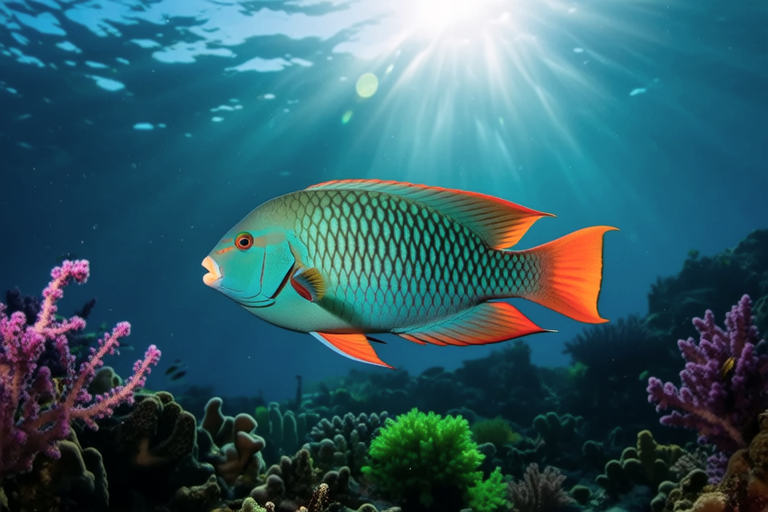
Parrot Fish: Nature’s Underwater Artists with a Pop of Color
The world’s oceans are teeming with a vast array of colorful and fascinating creatures, but few can match the vibrant splendor of the parrot fish. These fish are not only stunning to look at but also play a crucial role in maintaining the health of coral reef ecosystems. This article delves into the intricate details of parrot fish, exploring their vibrant colors, unique patterns, and significant contributions to marine biodiversity.
The Vibrant Palette of Parrot Fish
Parrot fish are renowned for their striking and varied colorations, which range from dazzling blues and greens to fiery reds and oranges. Their scales are often adorned with intricate patterns that seem almost too elaborate for nature to have created. The males, especially during breeding season, display an even more pronounced palette of colors, making them a sight to behold. These hues are not just aesthetically pleasing; they serve important purposes in communication and camouflage within their environment.
One of the most iconic species is the Queen parrot fish, known for its bright blue body and vivid yellow tail. Another notable example is the Midnight parrot fish, which features dark purple scales with gold accents, creating a striking contrast. The combination of these colors and patterns makes each parrot fish a unique masterpiece of nature.
Ecological Role and Feeding Habits
Parrot fish play a pivotal role in the maintenance of coral reefs. They are herbivores, primarily feeding on algae that grow on coral and rocks. By grazing on these algae, they prevent overgrowth, which could otherwise smother and kill the coral. This activity helps to keep the reef healthy and thriving, ensuring the survival of countless other marine species that depend on it.
Interestingly, parrot fish have evolved specialized teeth that form a beak-like structure, allowing them to scrape algae off hard surfaces. After consuming the algae, their digestive systems process the material, and they excrete it as sand. In fact, many tropical beaches owe their white sandy shores to parrot fish, whose waste contributes significantly to the formation of coral reef islands.
Biodiversity and Habitat Preferences
Parrot fish are found in warm, shallow waters across the world, particularly in regions such as the Caribbean, the Red Sea, and the Indo-Pacific. They prefer areas rich in coral reefs, where they can find ample food and shelter. Coral reefs are among the most diverse ecosystems on Earth, and parrot fish are integral to this biodiversity.
These fish are social animals, often seen in groups called “schools.” Schools provide protection from predators and allow for efficient foraging. Parrot fish are also known for their territorial behavior, particularly males who defend specific areas against intruders. This behavior ensures the stability and balance of the ecosystem.
Behavior and Threats
Parrot fish exhibit fascinating behaviors that reflect their complex social structures. Males, for instance, engage in elaborate courtship rituals to attract females. During these displays, they may change color dramatically, swim in circles, or perform acrobatic maneuvers. Once mating occurs, the female releases her eggs, which are then fertilized by the male.
Despite their importance to marine ecosystems, parrot fish face several threats in the wild. Overfishing poses one of the greatest dangers, as they are highly valued for their meat and vibrant skin. Additionally, habitat destruction due to pollution and climate change impacts their ability to thrive. Coral bleaching, caused by rising sea temperatures, can lead to the death of corals, leaving parrot fish without a primary food source or shelter.
Nature’s Underwater Artists
Parrot fish are truly nature’s artists, both in terms of their physical appearance and their ecological contributions. Their vibrant colors and intricate patterns serve as a testament to the beauty and complexity of marine life. Moreover, their role in maintaining coral reefs ensures the health and diversity of entire ecosystems.
Conservation efforts are essential to protect these magnificent creatures and the habitats they call home. By raising awareness and supporting initiatives aimed at preserving coral reefs, we can help ensure that future generations will continue to marvel at the vibrant underwater world of parrot fish.
Conclusion
Parrot fish are more than just colorful inhabitants of the ocean; they are vital players in the delicate balance of marine ecosystems. Their striking appearances and unique behaviors make them captivating subjects for study and admiration. By understanding and appreciating the role of parrot fish, we can better appreciate the interconnectedness of all life in our oceans and work towards their preservation.
