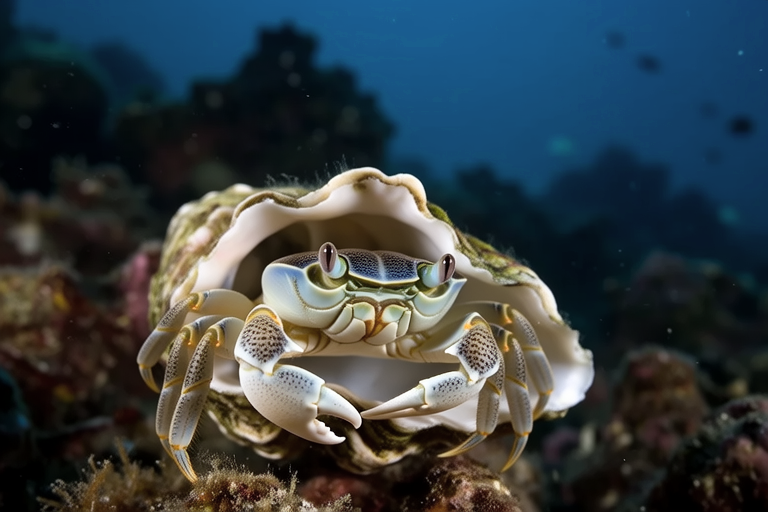
The Journey of Pea Crabs from Ocean Depths to Consumer Tables
Pea crabs (Pinnotheres ostreum) are tiny crustaceans that have captured the attention of marine biologists and food enthusiasts alike for their unique life cycle, symbiotic relationships, and culinary uses. These fascinating creatures inhabit the deep ocean, where they live in harmony with other marine species, and eventually find their way to consumers’ tables. This article explores the intriguing life cycle, habitat, and journey of pea crabs, shedding light on their role in marine ecosystems and their significance in various cuisines.
Unique Life Cycle and Habitat
Pea crabs are small, typically measuring between 4 to 8 millimeters in length. They are part of the Pinnotheridae family and are found in shallow coastal waters, estuaries, and deep ocean environments. Their preferred habitat includes oysters, mussels, sea cucumbers, and other marine animals that provide shelter and protection. Pea crabs are ectoparasites, meaning they live outside their host’s body but still depend on them for survival.
Their life cycle begins when female pea crabs release eggs into the water. Once hatched, the larvae drift in the currents until they find a suitable host. Upon finding a host, the larvae undergo metamorphosis, transforming into juvenile crabs that settle inside their host’s mantle cavity. Here, they feed on the host’s tissue and reproductive fluids, a relationship known as parasitism. However, this relationship is not always harmful; in many cases, it benefits both parties. The host provides shelter and nutrients, while the pea crab helps clean the host by feeding on waste products and parasites.
In addition to their small size, pea crabs have a hard exoskeleton that protects them from predators. Their legs are adapted for crawling inside their hosts, and they possess specialized mouthparts for feeding on soft tissues. Despite their tiny size, pea crabs play an important role in maintaining the balance of their ecosystem by controlling populations of certain parasites and helping to keep their hosts healthy.
Symbiotic Relationships
Pea crabs have established symbiotic relationships with several marine species, including oysters, mussels, and sea cucumbers. In these relationships, both the pea crab and its host benefit from each other. For example, pea crabs living inside oysters feed on the oyster’s reproductive fluids and waste products, helping to keep the oyster clean and healthy. In return, the oyster provides the pea crab with a safe environment and nutrients.
Another example of a symbiotic relationship is the one between pea crabs and sea cucumbers. Pea crabs often live inside the sea cucumber’s body, feeding on its waste products and parasites. This relationship benefits both parties, as the sea cucumber remains free from parasites, and the pea crab receives a steady supply of food.
These symbiotic relationships are essential for maintaining the balance of marine ecosystems. By controlling parasite populations and keeping their hosts healthy, pea crabs contribute to the overall health of the ecosystem.
Journey Through Harvesting Processes
Once harvested from their hosts, pea crabs undergo a series of processing steps before reaching consumers’ tables. After being removed from their hosts, the crabs are cleaned and sorted by size. They are then packed in ice or refrigerated containers to maintain freshness during transportation. Depending on the destination, pea crabs may be shipped fresh, frozen, or processed into ready-to-eat products.
Fresh pea crabs are highly sought after by chefs and seafood lovers due to their delicate flavor and texture. They are often used in sushi, sashimi, and other raw preparations. Frozen pea crabs are convenient for home cooks and restaurants that cannot access fresh products. Processed pea crabs are available in various forms, such as canned, smoked, or pickled, making them accessible to a wider audience.
The harvesting process can have environmental impacts, particularly if not managed sustainably. Overharvesting can lead to declines in pea crab populations and disrupt the balance of marine ecosystems. To ensure sustainable practices, many fisheries and aquaculture operations implement measures such as size limits, catch quotas, and closed seasons to protect pea crab populations.
