Heterometrus Spinifer: Discovering the Life, Legends, and Lesser-Known Facts
Introduction to Heterometrus Spinifer
The Heterometrus spinifer, commonly known as the Asian forest scorpion, belongs to the family Scorpionidae. This intriguing arachnid is classified under the genus Heterometrus, which is distinguished by its robust build and large size. Native to Southeast Asia, Heterometrus spinifer plays a crucial role in local ecosystems, and its presence is often intertwined with rich cultural folklore.
Physical Characteristics
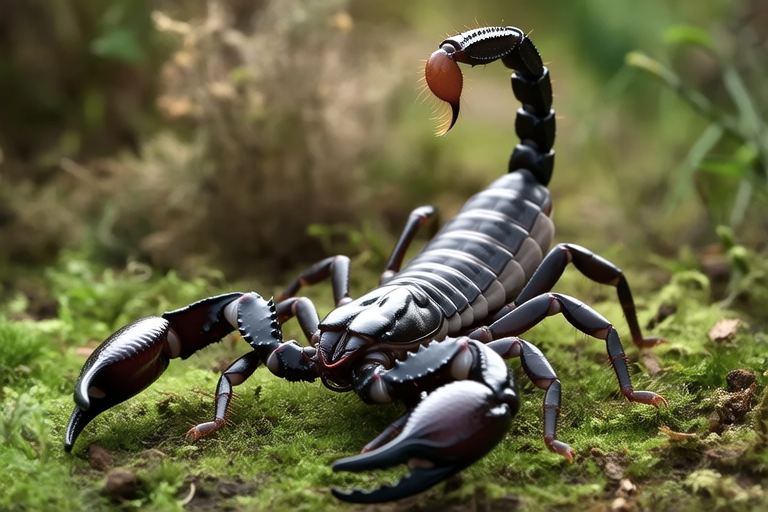
Heterometrus spinifer is characterized by its formidable appearance, featuring a dark brown or black exoskeleton, which provides excellent camouflage in its natural environment. The scorpion’s most striking feature is the pair of long, segmented pincers, known as pedipalps, used for grasping prey and defending against predators. Its tail, adorned with a venomous stinger, curves over its back, ready to deliver a potent sting if threatened. The scorpion measures between 7 to 12 centimeters in length, making it one of the largest scorpions found in the region.
Habitat and Typical Behaviors
Natural habitats of Heterometrus spinifer include dense tropical forests, caves, and rocky outcrops. These environments provide ample cover and hiding spots, essential for both protection and hunting. The scorpion is primarily nocturnal, emerging at night to hunt small insects, spiders, and other arthropods. It uses its keen sense of touch and chemoreception to locate prey, ensuring successful hunts even in the darkness.
The Life Cycle of Heterometrus Spinifer
The life cycle of Heterometrus spinifer begins with mating, which typically occurs during the rainy season when humidity levels are high. Male scorpions perform complex courtship dances, leading the female through a series of movements that culminate in copulation. After mating, the female carries fertilized eggs internally until they hatch into live young, usually after a gestation period of several months.
Newborn scorpions, called scorplings, are born live and remain attached to their mother’s back for the first few days of life. During this time, they receive nourishment from unfertilized eggs provided by their mother. Once independent, scorplings undergo several molts, shedding their exoskeletons to grow larger and stronger. Over the course of their lives, Heterometrus spinifer can live up to 6 years, reaching sexual maturity around 3 to 4 years of age.
Legends and Cultural Significance
Across various cultures in Southeast Asia, Heterometrus spinifer has been woven into rich tapestries of folklore and legend. In some regions, the scorpion is revered as a symbol of strength and resilience, believed to possess magical powers that protect against evil spirits. Conversely, in other areas, it is feared and regarded as a harbinger of misfortune. These contrasting views reflect the complex relationship humans have with nature and the mysteries it holds.
For instance, in certain parts of Thailand, the scorpion is associated with fertility and prosperity, while in neighboring countries, it may be linked to tales of bravery and cunning. These legends often serve as cautionary tales, warning people of the dangers posed by the scorpion’s venomous sting, while also highlighting the importance of respecting the natural world.
Lesser-Known Facts About Heterometrus Spinifer
Beyond its physical attributes and cultural significance, Heterometrus spinifer possesses several unique adaptations that make it a fascinating subject of study. One such adaptation is its ability to survive in environments with limited water availability. The scorpion can store water in its body for extended periods, allowing it to endure dry spells without perishing. Additionally, it has developed specialized sensory organs that enable it to detect vibrations in the ground, helping it locate prey or avoid danger.
Recent scientific discoveries have shed light on the complex interactions between Heterometrus spinifer and other wildlife. Researchers have observed that the scorpion plays a vital role in controlling insect populations, contributing to the overall health of its ecosystem. Moreover, studies have revealed that the venom of Heterometrus spinifer contains compounds with potential medicinal properties, including pain-relieving and anti-inflammatory effects. These findings open new avenues for medical research and drug development.
In conclusion, Heterometrus spinifer is more than just a formidable predator; it is a creature steeped in history, culture, and scientific intrigue. From its ancient origins to its modern-day significance, the Asian forest scorpion continues to captivate and inspire those who encounter it. By understanding its life cycle, behavior, and ecological role, we gain valuable insights into the intricate web of life that sustains our planet.
