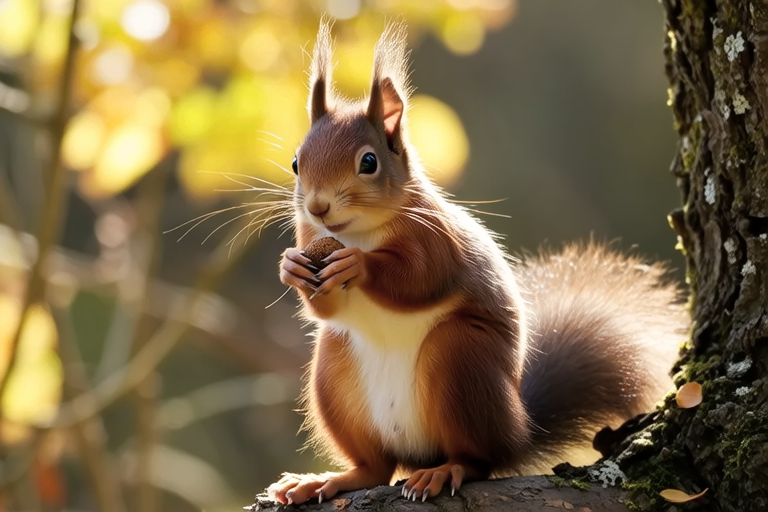
The Intriguing World of Squirrels
From bustling city parks to serene forest glades, squirrels are ubiquitous inhabitants of our natural landscapes. These nimble creatures, known for their bushy tails and agile movements, play a significant role in maintaining the ecological balance of their habitats. Let’s delve into the fascinating behaviors and daily adventures of squirrels, exploring their natural habitat exploration, food gathering techniques, social interactions, challenges they face, and their playful antics.
Natural Habitat Exploration
Squirrels are found in various habitats across the globe, from temperate forests to urban areas. They prefer environments rich in trees and vegetation, where they can find shelter and food. In forests, squirrels often build nests called dreys high up in the branches, providing protection from both predators and harsh weather conditions. These nests are typically constructed from twigs, leaves, and moss, creating cozy homes that keep them insulated during cold winter months.
In cities, squirrels have adapted remarkably well to human-made structures. They frequently inhabit parks, gardens, and even rooftops, using their sharp claws to climb trees and buildings alike. Their ability to navigate diverse environments showcases their resilience and adaptability, allowing them to thrive in both rural and urban settings.
Food Gathering Techniques: Nut Stashes
One of the most remarkable aspects of squirrel behavior is their methodical approach to food storage. Squirrels are scatter-hoarders, meaning they collect and bury nuts and seeds throughout their territory. This practice ensures a reliable food supply during lean times, such as winter when food sources are scarce. Scientific studies reveal that squirrels can remember the location of thousands of buried nuts, an impressive feat considering the vastness of their territories.
The process of caching food involves meticulous preparation. Squirrels first select the healthiest nuts, then use their keen sense of smell to find suitable spots for burial. They dig small holes, place the nuts inside, and cover them with soil or leaves. Interestingly, some nuts are never retrieved by the squirrel that cached them, contributing to the reforestation efforts by inadvertently planting new trees.
Social Interactions Within Communities
Contrary to popular belief, squirrels are not entirely solitary animals. While they spend much of their time alone, they do engage in social interactions within their communities. Males and females come together briefly during mating season, but otherwise, they maintain individual territories. However, there is evidence of cooperation among squirrels, especially when it comes to defending against common threats like predators.
Communication plays a vital role in these interactions. Squirrels use a variety of vocalizations, body postures, and tail movements to convey messages to one another. For instance, a flick of the tail can signal alarm, while chattering sounds might indicate aggression or territorial disputes. Understanding these communication methods provides valuable insights into squirrel societies and their complex relationships.
Challenges Faced by Squirrels: Predators and Urban Environments
Despite their adaptability, squirrels face numerous challenges in their quest for survival. One of the primary threats comes from predators, including birds of prey, foxes, and domestic cats. To evade these dangers, squirrels rely on speed, agility, and their natural camouflage. Their reddish-brown fur blends seamlessly with tree bark, making it difficult for predators to spot them from a distance.
Urban environments present unique challenges for squirrels. While cities offer abundant food sources, they also expose squirrels to hazards like traffic, pollution, and competition with other wildlife. Additionally, the presence of humans can disrupt their normal routines, forcing them to adapt their behaviors to coexist alongside us. Despite these obstacles, squirrels have proven to be resilient creatures, capable of thriving in diverse and sometimes hostile environments.
Playful Antics in Parks
For many people, squirrels are best known for their playful antics in city parks. Observing these charming creatures scurrying up trees, leaping from branch to branch, and engaging in playful chases can bring joy and wonder to park-goers. Their acrobatic skills are truly remarkable, allowing them to traverse narrow branches with ease and land gracefully on the ground below.
While play may seem trivial, it serves an important purpose in squirrel communities. Play helps young squirrels develop essential motor skills and social bonds, preparing them for adulthood. It also allows adults to maintain physical fitness, ensuring they are ready to face any challenges that come their way.
Scientific Insights About Diet, Habitat Preferences, and Communication Methods
Squirrels are primarily herbivores, with a diet consisting mainly of nuts, seeds, fruits, and occasionally insects. Their digestive systems are well-adapted to processing plant matter, allowing them to extract maximum nutrients from their food sources. However, squirrels are opportunistic feeders, meaning they will eat whatever is available, including bird eggs and small mammals if necessary.
When it comes to habitat preferences, squirrels show a strong preference for areas with ample food resources and safe nesting sites. Forests provide ideal conditions, offering a wide variety of trees and shrubs that produce edible fruits and seeds. In urban settings, squirrels have learned to exploit human-provided food sources, such as bird feeders and garbage bins.
Communication methods among squirrels are diverse and sophisticated. In addition to vocalizations and body language, squirrels also use scent marking to communicate territorial boundaries and attract mates. These chemical signals, left behind through urine and glandular secretions, allow squirrels to leave messages for others in their community.
The Role of Squirrels in Local Ecosystems
Squirrels play a crucial role in local ecosystems, acting as seed dispersers and pollinators. By caching nuts and seeds, they help spread plant species across their territories, promoting biodiversity and forest regeneration. Their foraging activities also contribute to soil health by aerating the ground and redistributing nutrients.
Moreover, squirrels serve as prey for larger animals, forming an integral part of the food chain. Their presence in an ecosystem indicates a healthy balance between predator and prey populations, reflecting the overall health of the environment.
Why Understanding Squirrels Enriches Our Appreciation of Nature
Exploring the world of squirrels offers valuable lessons about adaptation, survival, and the interconnectedness of all living things. By studying these creatures, we gain a deeper understanding of the delicate balance that exists within ecosystems and the importance of preserving natural habitats.
Understanding squirrels also fosters empathy and respect for wildlife, encouraging us to coexist harmoniously with other species. As we learn more about these fascinating animals, we become better stewards of the planet, working to protect and conserve the natural world for future generations.
