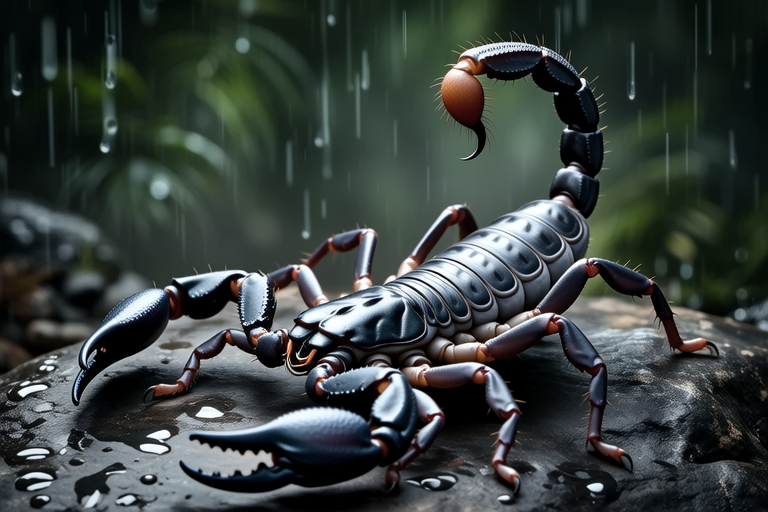
The Enigmatic Heterometrus Spinifer: A Scorpion With Spine

Deep within the lush rainforests of Southeast Asia lies a creature that has captured the imagination of many wildlife enthusiasts: Heterometrus spinifer. This scorpion is renowned for its distinctive physical characteristics, particularly its formidable spines, which give it both its name and its enigmatic allure. While it may appear intimidating, the Heterometrus spinifer is a fascinating creature that plays a crucial role in its ecosystem.
Physical Characteristics: The Spines
The most striking feature of the Heterometrus spinifer is undoubtedly its spines. These spines are not just ornamental; they serve multiple purposes. Firstly, they act as a deterrent to potential predators. The spines are sharp and can inflict painful injuries if provoked, making them an effective defense mechanism. Secondly, these spines play a role in the scorpion’s mating rituals. During courtship, males use their spines to grasp onto the female, ensuring a successful transfer of sperm.
In addition to its spines, the Heterometrus spinifer boasts a robust body structure. It can grow up to 10 centimeters in length, making it one of the larger species of scorpions. Its coloration ranges from dark brown to black, providing excellent camouflage against the forest floor. This coloration also aids in regulating body temperature by absorbing heat from the environment.
Habitat and Natural Behavior
The Heterometrus spinifer thrives in the dense, humid rainforests of Southeast Asia, where it finds ample hiding spots among fallen leaves, under rocks, and inside tree hollows. It is nocturnal, venturing out after dusk to hunt for prey. This behavior minimizes exposure to daytime heat and predators, allowing it to conserve energy.
One of the most intriguing aspects of the Heterometrus spinifer‘s behavior is its ability to adapt to various environmental conditions. It can survive in areas with high humidity and temperatures, which is a testament to its resilience. However, it is sensitive to changes in its habitat, such as deforestation and pollution, which can disrupt its ecosystem and affect its survival.
Diet and Interactions with Other Species
The Heterometrus spinifer is primarily an insectivore, feeding on a wide variety of insects, including crickets, grasshoppers, and beetles. Its powerful pincers allow it to capture and subdue prey, while its venomous sting ensures a quick kill. This diet helps control insect populations, playing a vital role in maintaining ecological balance.
While the Heterometrus spinifer is generally solitary, it does interact with other species in its ecosystem. For instance, it shares its habitat with other nocturnal creatures, such as frogs and lizards. These animals often compete for similar food sources, leading to complex interactions. Additionally, the scorpion serves as prey for larger predators, such as birds and snakes, further illustrating its role in the food chain.
Myths and Misconceptions
Despite its fascinating attributes, the Heterometrus spinifer is often misunderstood. One common myth is that all scorpions are deadly. In reality, only a few species possess venom potent enough to be fatal to humans. The Heterometrus spinifer belongs to this category, but its venom is generally not lethal to humans unless there are underlying health issues or the individual is highly allergic.
Another misconception is that scorpions always glow under ultraviolet light. While many scorpions do exhibit fluorescence, this is not universal. The Heterometrus spinifer does not fluoresce, adding to its enigmatic nature. This lack of fluorescence makes it harder to spot during nighttime surveys, contributing to limited data on its population and distribution.
Conservation Status and Efforts
The Heterometrus spinifer is currently listed as “Data Deficient” by the International Union for Conservation of Nature (IUCN). This classification reflects the lack of comprehensive research on its population size and distribution. However, ongoing habitat destruction and fragmentation pose significant threats to its survival.
Efforts to protect the Heterometrus spinifer and its habitat are underway. Conservation organizations are working to establish protected areas and promote sustainable land-use practices. Education campaigns aim to raise awareness about the importance of preserving biodiversity and the role of scorpions in ecosystems. Additionally, researchers are conducting studies to better understand the species’ biology and ecology, which will inform future conservation strategies.
As we continue to explore the wonders of the natural world, the Heterometrus spinifer stands as a symbol of the complexity and beauty of life. Its unique physical characteristics, enigmatic behavior, and critical role in its ecosystem make it a captivating subject for study and admiration. By supporting conservation efforts and fostering a deeper understanding of this remarkable creature, we can ensure its continued existence for generations to come.
