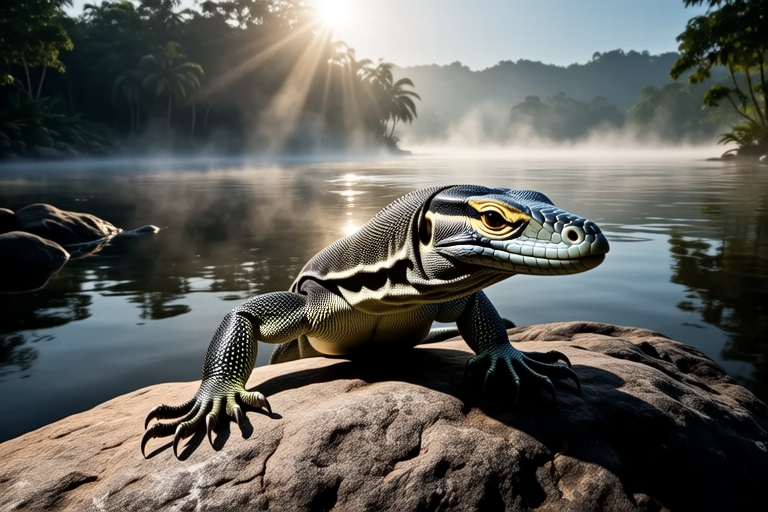
Top 10 Facts About Water Monitors That Will Amaze You and Your Kids
Water monitors are one of the most fascinating creatures that roam the Earth. These large lizards are not only impressive in size but also have unique behaviors and adaptations that make them stand out from other reptiles. Whether you’re a child or an adult, there’s something truly amazing about these animals that will capture your imagination. Let’s dive into the top 10 facts about water monitors that will leave you in awe.
1. The Largest Lizard on Earth
The water monitor (Varanus salvator) is the second largest lizard in the world, after its cousin, the Komodo dragon. Adult males can grow up to 3 meters (9.8 feet) long and weigh around 30 kilograms (66 pounds). To put this into perspective, that’s almost as long as a full-grown human and heavier than most people. Imagine walking through a forest and suddenly spotting one of these giant lizards!
2. Versatile Diet
Water monitors are opportunistic feeders, meaning they eat whatever they can find. Their diet includes fish, crabs, frogs, birds, small mammals, eggs, and even other reptiles. They have strong jaws and sharp teeth, which allow them to tackle prey much larger than themselves. In fact, they are known to take down venomous snakes like cobras. Their varied diet helps them survive in different environments.
3. Habitat: From Forests to Rivers
These versatile lizards can be found in a wide range of habitats, including tropical forests, mangrove swamps, and riverbanks. They are excellent climbers and swimmers, which allows them to exploit various ecological niches. Water monitors are native to Southeast Asia, particularly in countries such as India, Indonesia, Malaysia, and Thailand. Their ability to thrive in diverse environments contributes to their success as a species.
4. Exceptional Swimmers
Water monitors are expert swimmers, thanks to their long, powerful tails that act like rudders. They can dive underwater for up to 30 minutes and swim at speeds of up to 20 kilometers per hour (12 miles per hour). This ability to stay submerged for extended periods makes them efficient hunters and allows them to escape predators. Their streamlined bodies and webbed feet further enhance their aquatic prowess.
5. Lifespan and Growth
Water monitors can live up to 20 years in the wild, although their lifespan may be shorter due to predation or habitat loss. They grow rapidly during their first few years, reaching sexual maturity at around 3 to 4 years of age. By this time, they are usually about 1 meter (3.3 feet) long. Their growth rate slows down as they reach adulthood, allowing them to focus on reproduction and survival.
6. Unique Behaviors
Water monitors exhibit several interesting behaviors. For instance, they use their tongues to sense chemicals in the air and ground, helping them locate food and potential mates. They also engage in social interactions, such as head-bobbing displays to establish dominance. Additionally, females lay clutches of 20 to 50 eggs, which they bury in sandy soil. The eggs incubate for about 6 to 8 months before hatching.
7. Adaptations for Survival
Water monitors have evolved several adaptations that help them survive in their environment. Their keen eyesight and sense of smell allow them to detect prey from a distance. Their muscular build and sharp claws enable them to climb trees and dig burrows. Furthermore, their ability to hold their breath for long periods underwater gives them a competitive edge when hunting or escaping danger.
8. Communication Through Scent
Water monitors rely heavily on chemical signals to communicate with each other. They have specialized organs called vomeronasal organs located inside their mouths, which they use to detect pheromones released by other monitors. These pheromones convey important information, such as reproductive status or territorial boundaries. By flicking their tongues in and out, they can gather scent particles and transfer them to these organs for analysis.
9. Cultural Significance
In many parts of Southeast Asia, water monitors hold cultural significance. In some communities, they are considered sacred animals and are protected by local traditions. However, in other areas, they are hunted for their meat, skin, and bile, which is believed to have medicinal properties. Conservation efforts are crucial to ensure the survival of these magnificent creatures, especially given the threats posed by habitat destruction and illegal trade.
10. Conservation Status
Due to habitat loss, overhunting, and the pet trade, water monitors are listed as near threatened on the International Union for Conservation of Nature (IUCN) Red List. Efforts are underway to protect their habitats and reduce poaching activities. Education and awareness campaigns play a vital role in ensuring the future of these remarkable animals. By supporting conservation initiatives, we can help preserve the water monitor population for generations to come.
In conclusion, water monitors are truly remarkable creatures with many fascinating traits. From their impressive size and versatile diet to their exceptional swimming skills and unique behaviors, there’s no denying that these lizards are a marvel of nature. By learning more about them, we can develop a deeper appreciation for these animals and work towards protecting them and their habitats. So next time you visit a zoo or encounter one of these magnificent lizards in the wild, take a moment to marvel at their incredible adaptations and the role they play in our ecosystem.
